

 Interview with
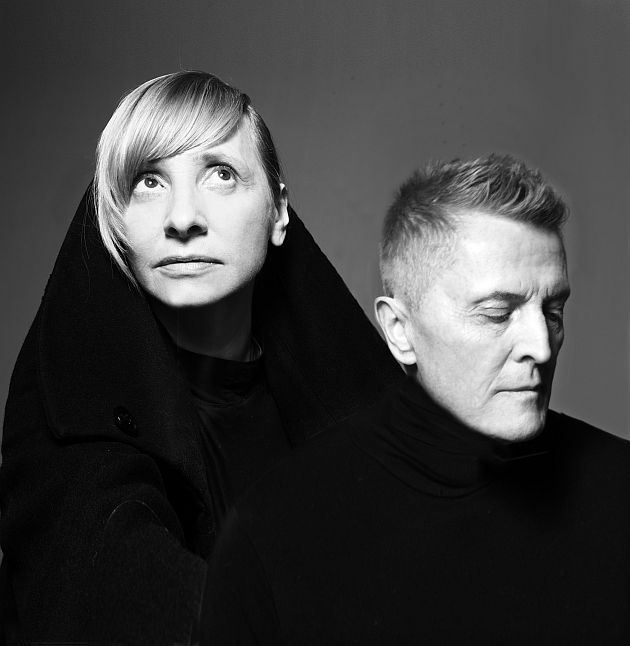
 Robert Görl & Sylvie Marks from Görl
GÖRL is the kind of project that seems to exist somewhere between shadow and movement. Robert Görl and Sylvie Marks have created a sound that is minimal without feeling empty, dark without becoming cold, and repetitive in a way that slowly pulls you in. With their first album, ‘Dark Silver Moon Light’, they are not trying to recreate anything that came before. Instead, they follow instinct, friction, repetition and the occasional “wrong” note - and turn them into something unmistakably their own.
We spoke with Robert and Sylvie about the strange chemistry behind GÖRL, about breaking musical rules, finding emotion in simplicity, and why even in darker times there is still room for movement, hope and rebellion.
Reflections of Darkness [RoD]: ‘Dark Silver Moon Light’ feels like a dream suspended somewhere between reality and illusion. Did the mysterious encounter by the lake become the conceptual starting point for the entire album, or did it simply find its place as the perfect title?
Görl:‘Dark Silver Moon Light’ is the perfect title for our album. Yes, we were inspired by the lake, especially in that moment when it seemed as if the moon was falling into the water.
RoD: The album never sounds nostalgic, despite both of you having decades of history behind you. Was it important to create something that looks forward rather than back?
Görl:We like looking forward, and experimenting with new sounds is very important to us. Nevertheless, we feel that our album does have a nostalgic touch. In the end, it depends on how the listener experiences it.
RoD: Throughout the record, repetition becomes almost hypnotic. What fascinates you about saying less, but making every word matter more?
Görl:We work with sound sequences, and repetition is part of the nature of a sequence. Repeating words fits harmonically with the sequences, and together they create a kind of hypnosis.
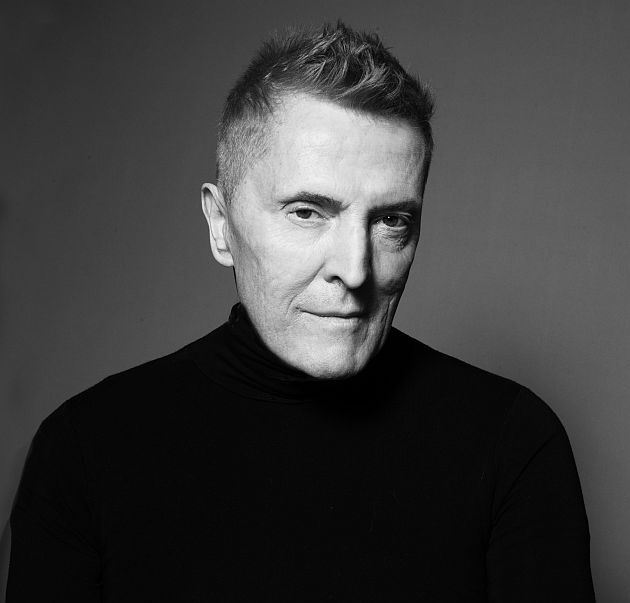
RoD: Robert, after DAF and your solo work, what surprised you most about creating music with Sylvie Marks?
Robert:The newness, the freshness, the feminine energy and the know-how really inspired me. With Sylvie Marks, everything felt as if we had known each other for a very long time. In fact, we had crossed paths many times over the years, sometimes only by a few meters, because we were involved with the same labels, offices and clubs. Yet we never actually met until we finally crossed paths in a Berlin subway in 2019.
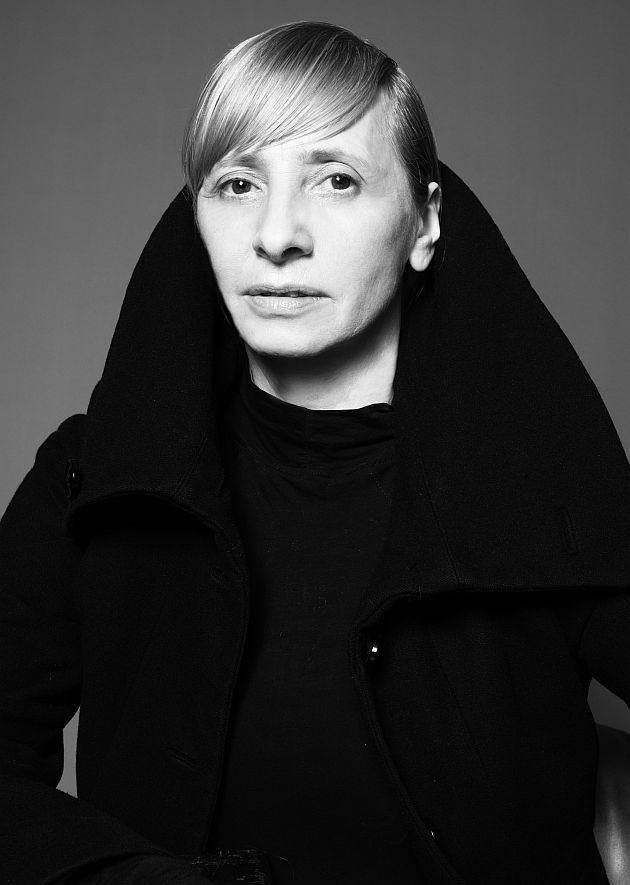
RoD: Sylvie, you’ve spent years shaping dance floors as a DJ and producer. How different is it to build an album designed for listening as much as for movement?
Sylvie:For me, it isn’t really that different. I was already shaping electronic sounds in the studio when I was 16. From 1989 onwards, I worked as a DJ, and eventually I started producing my own music with Emagic Logic Audio.
RoD: Your collaboration feels remarkably balanced. Does one of you usually bring the initial idea, or do songs emerge from genuine dialogue?
Görl:Most of the time, the songs emerge from our shared dialogue.
RoD: ‘Der falsche Ton’ almost sounds like a manifesto. Do you still believe that breaking musical rules is more important today than following them?
Görl:Absolutely. Breaking musical rules is a lot of fun for us. And in a way, breaking the rules is itself a musical law. It keeps opening up new possibilities.
RoD: Electronic music often strives for perfection. GÖRL seems to celebrate imperfection instead. Is that your definition of artistic freedom?
Görl:There are no musical boundaries for us. Perfection and imperfection are always also a matter of perspective.
RoD: Your music is minimal, but emotionally rich. How difficult is it to know when a song is finished - and not to add one layer too many?
Görl: There is beauty in simplicity. And if you listen closely, our music is anything but simply constructed. We pay attention to the smallest details and to creating something that awakens emotions.
RoD: ‘Irgendwann ist jetzt’ delivers a simple but powerful message: stop postponing life. Has this become your own philosophy as well?
Görl:We have always believed that it is best not to put things off. It gets you the furthest.
RoD: Songs like ‘Don’t Stay At Home’ and ‘Es ist nie zu spät’ feel unexpectedly hopeful beneath their dark atmosphere. Do you see hope as a form of rebellion today?
Görl:We can answer that very simply: it is the rebellion of love.
RoD: Many of your lyrics leave space for interpretation rather than offering clear answers. Do you prefer listeners to discover their own stories inside your songs?
Görl:Exactly. That is very important to us.
RoD: Robert, people will inevitably connect GÖRL with DAF. Do you embrace those comparisons, or do you hope listeners approach this project with completely fresh ears?
Robert:I don’t really think about it. I simply trust my own musical signature.
RoD: If DAF captured the energy of a changing Germany in the late 1970s and 1980s, what do you think GÖRL says about the world in 2026?
Görl:It is a concentrated force of energy standing against a noticeable regression.
RoD: Finally, if someone experiences GÖRL live for the very first time, what should they expect: a concert, a club experience, or something closer to performance art?
Görl:We already completed a four-year tour with the farewell album, so we had the opportunity to see how the audience responds. The energy felt very much like DAF. We’re excited about the future.
Pictures by Rick Burger