

 Interview with
Micha Rhein (vocals) from In Extremo, Universum25
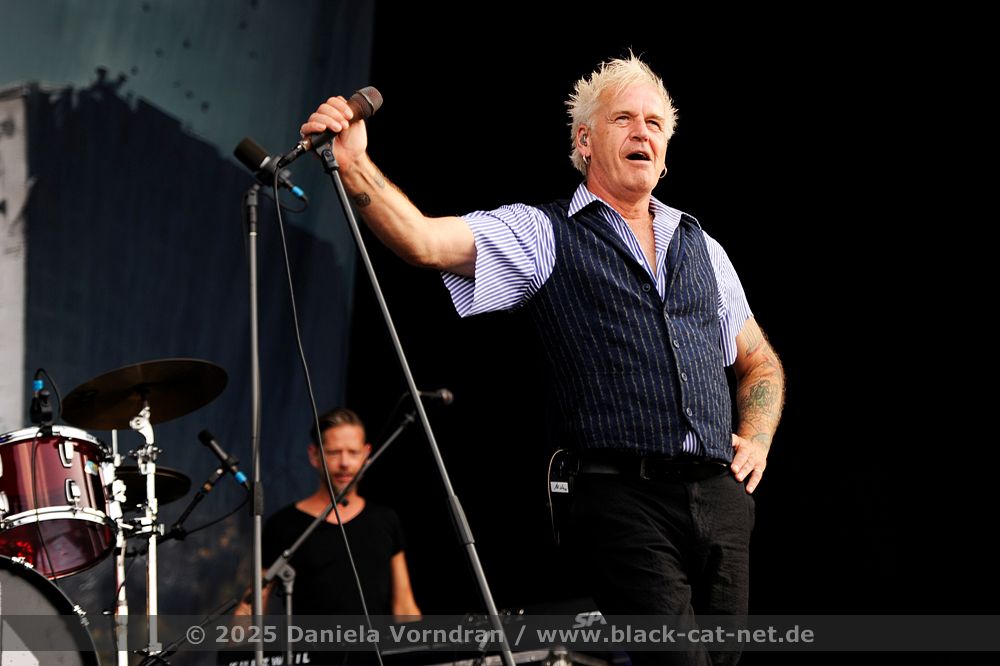
An Interview with Michael Robert Rhein - better known as Das Letzte Einhorn (“The Last Unicorn”), a stage name that has long since become part of his identity following the founding of IN EXTREMO - was something I had wanted to do for a very long time. Sometimes it feels as if meaningful conversations require more than just matching schedules; they need the right mood, the right geography, even the right temperature in the air.
And unexpectedly, that moment arrived in Micha’s homeland - in Thuringia - during the “Die Maschinen wollen leben” Tour 2026, dedicated to the newly released album of the same name by his second project, UNIVERSUM25. Micha is an artist who has long transcended the boundaries of a single band. IN EXTREMO represents millions of records sold, massive stages, and decades of history that have become part of European Rock culture. It is a level many aspire to, but few ever reach. At the same time, UNIVERSUM25 moves in a different - yet equally powerful - direction: modern, sharp-edged, and alive. The 2026 tour is entirely sold out, carrying a tangible sense of momentum and forward motion. This is no side project; it is a force of its own.
I wanted to explore the parallels between these two worlds. What does it mean to lead two strong musical projects at once? Is it possible to divide yourself creatively - or does one inevitably have to choose?
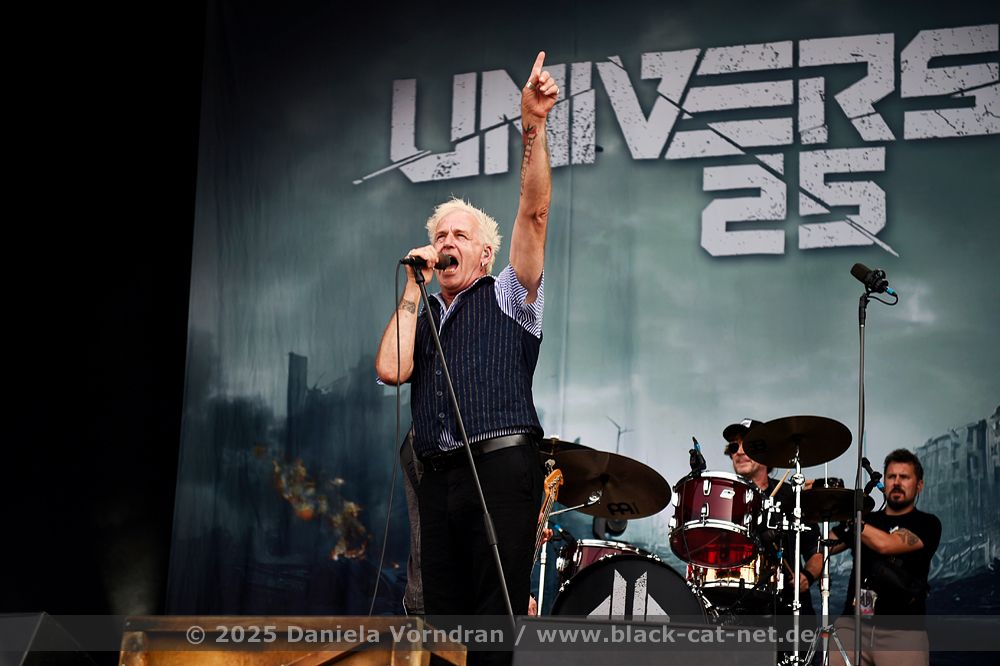
And after asking Micha what he can do in UNIVERSUM25 that he cannot do in IN EXTREMO, I realized I already knew the answer before he spoke. On the UNIVERSUM25 stage, he is a vivid showman - teasing his bandmates, delivering sharp-witted remarks, occasionally even playfully “handing out mock slaps” in a way that feels completely natural and irresistibly funny. Standing in the front row, you can quite literally laugh until it hurts. It’s not just about music - it’s about theatrical freedom, energy, performance.
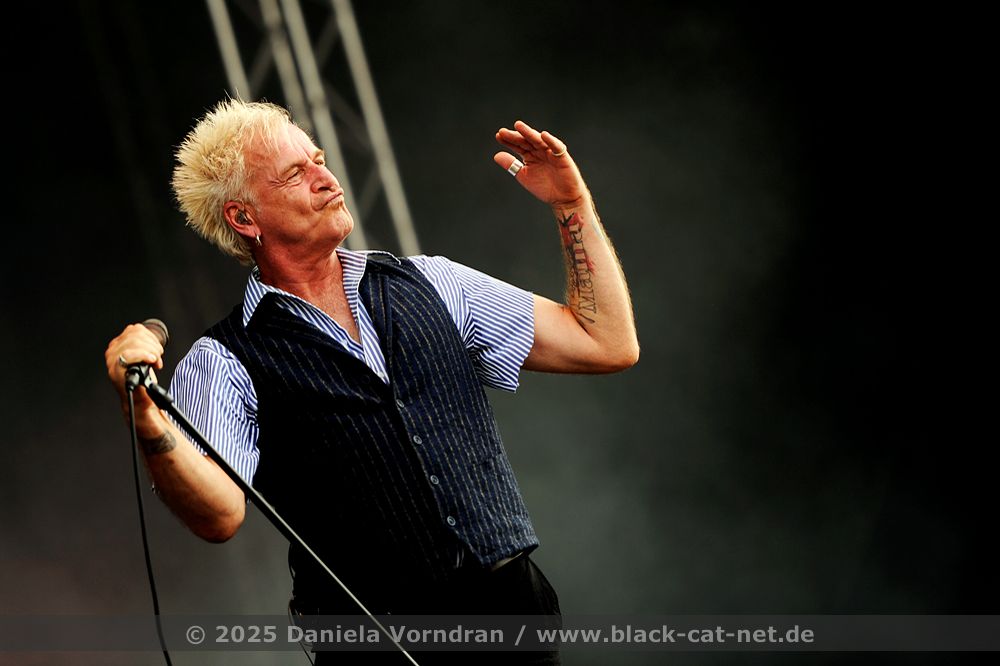
The setting carried its own symbolism. Museumskeller at HsD (Haus der sozialen Dienste), formerly the House of Trade Unions in Erfurt. Outside: +21°C, sunshine, the unmistakable feeling of early spring. Micha happily accepts small gifts from Ukraine, smiles warmly, and answers questions with professional ease. One might think that forty years on stage would change a person. But no. As he himself said, “I’m still the same Micha.” And it’s true. And later, during the concert, you understand something even more clearly - what bursts out of him is a timeless kind of medieval punk spirit, beyond age, beyond trends, beyond time itself.
Reflections of Darkness (RoD): Why was this the right moment to start UNIVERSUM25? Was it a long-standing idea or something spontaneous?
Micha: It definitely wasn’t spontaneous. The idea developed gradually. We had known each other for a long time - experienced musicians, each with our own background. During various conversations between us and producer Jörg Umbreit, the thought emerged that we should create something more modern, something leaning more toward an Industrial sound. What started as an exchange of ideas slowly became more concrete. At some point, we realized this shouldn’t remain just talk - it needed to become a band. And that’s how it all began.
RoD: What is it like to lead two strong musical projects at the same time?
Micha: It’s different energy and different responsibility. IN EXTREMO is a big story - decades of experience and a huge audience. UNIVERSUM25 is younger, more direct, more contemporary. But I clearly separate these worlds, so there’s no internal conflict.
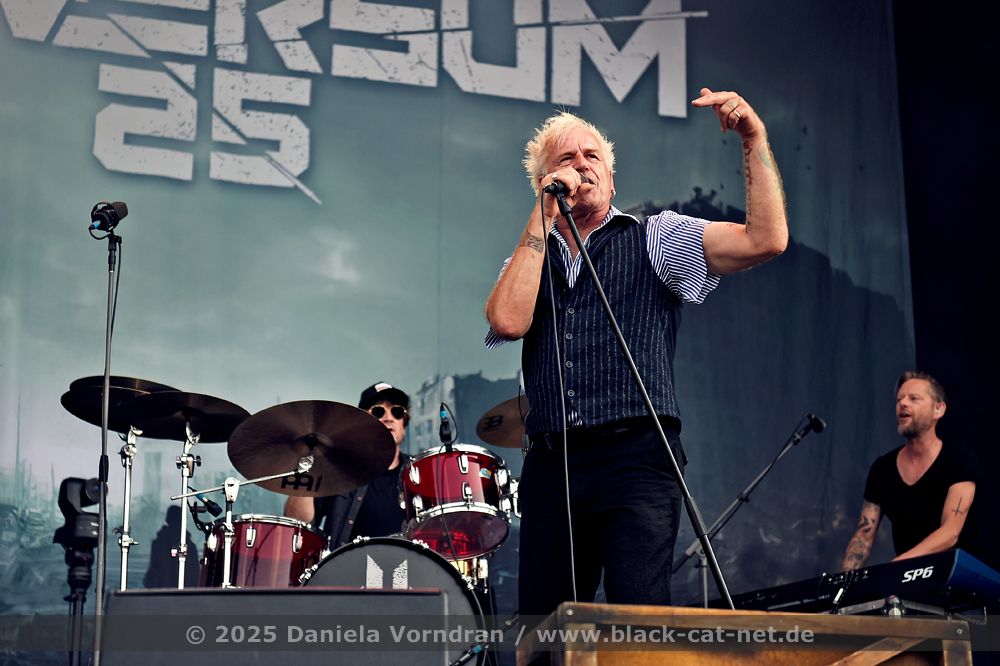
RoD: What can you allow yourself to do in UNIVERSUM25 that you can’t in IN EXTREMO?
Micha: Well, if we’re talking about me - my “charming voice,” as I like to call it [laughs] - and of course my style, those remain recognizable. People immediately know who’s singing. But in UNIVERSUM25 I can allow myself to be more direct, more ironic. Maybe I’m even a bit more static here - I don’t move around as much as I do in IN EXTREMO. The atmosphere on stage is different; everything unfolds in its own way. But overall, we’re all very cheerful guys - we genuinely have fun together, and you can feel that.
RoD: Are there moments when these two worlds intersect?
Micha: No. I deliberately keep them separate. They are two distinct spaces with different aesthetics.
RoD: Do musical ideas ever move from one project to the other?
Micha: No. If an idea is born for UNIVERSUM25, it stays there. IN EXTREMO has its own musical logic.
RoD: Is UNIVERSUM25 darker - or simply different in mood?
Micha: I’d say different. But yes, there is a certain dark aesthetic. We filmed our latest videos like ‘Gardinen zu’ and ‘Einsamkeit’ near Leipzig - in abandoned industrial locations. They resemble post-Soviet spaces. I grew up in Thuringia during the GDR era, and that architecture - concrete, cold facades - left its mark on me. Maybe that naturally finds its way into the music.
RoD: Is UNIVERSUM25 an experiment for you - or a long-term path?
Micha: IN EXTREMO will always be number one for me - you understand that. [laughs] But UNIVERSUM25 is not a temporary project. We’re working seriously, and a sold-out tour speaks for itself.
RoD: Where do you feel more musically free - in IN EXTREMO or in UNIVERSUM25?
Micha: UNIVERSUM25 has a different status and scale, so there’s more room for experimentation. But freedom isn’t only about style - it’s about being able to remain yourself. And I can do that in both projects.
RoD: What does the album title ‘Die Maschinen wollen leben’ mean to you?
Micha: We live in a time when artificial intelligence is already creating music. Machines write lyrics, generate melodies. More and more musicians don’t even pick up instruments anymore. The title is ironic, but it’s also a warning. It feels as if the machines want to live instead of us.
RoD: Is the album more of a warning - or more of an observation of our time?
Micha: Both. We’re not preaching. We’re simply observing what’s happening.
RoD: Do you think technology makes us stronger - or slowly replaces us? Where does the human being stand in this new digital world?
Micha: The world is moving in that direction. Technology strengthens us, but it can also gradually push us aside. The question is whether the human being will remain at the centre.
RoD: How important is it for you to perform new material live as early as possible?
Micha: Very important. The stage is the most honest test for a song. You immediately see whether it works.
RoD: Has your role as a frontman changed over the years?
Micha: You might think that after so many years of experience it would have - but no. I’m still the same Micha.
RoD: Do you still have dreams and goals after so many years on stage?
Micha: Of course. As long as there’s fire and the desire to step on stage, there are dreams.
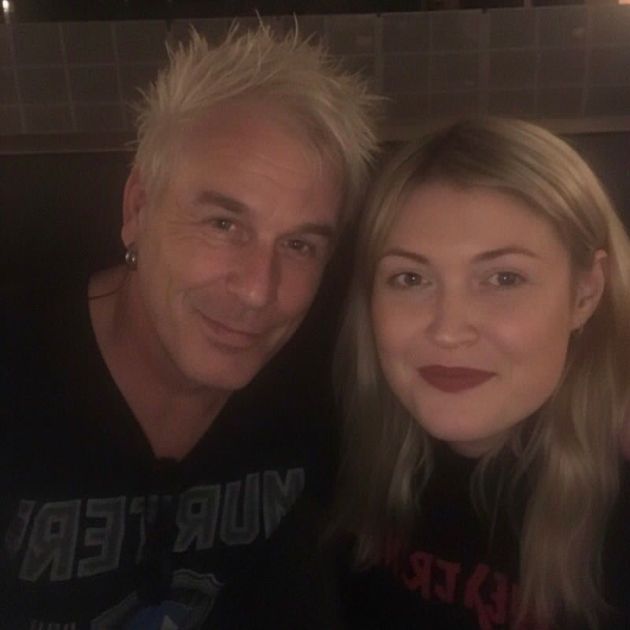
In the end, we touched on a subject that is impossible to ignore today - politics and the war in Ukraine. Micha emphasizes that both he and his bands try to stay outside of politics in their artistic work. Yet in personal conversation, it becomes clear that he cares. He speaks carefully and thoughtfully, but sincerely. He says the world would be simpler without certain figures who divide and provoke conflict. Still, he adds with a bitter smile, history shows that others often take their place.
Nevertheless, he sends words of support to Ukrainian fans and admits that he deeply sympathizes with everyone affected by the war. And in that moment, it becomes clear: even if music stays outside politics, humanity stands beyond any boundaries.
All Pictures by Daniela Vorndran