

 Airfield Drispenstedt, Hildesheim, Germany
7th to 9th August 2026
M’era Luna Festival 2026 Day 3 with Final Selection, Synthattack, Sotiria, Eisenfunk, Stahlmann, Jesus on Extasy, Skynd, Then Comes Silence, The 69 Eyes, Clan of Xymox, L’Âme Immortelle, Neuroticfish, Floor Jansen, Aesthetic Perfection, Lacrimosa, Die Krupps, OMD, IAMX, Saltatio Mortis
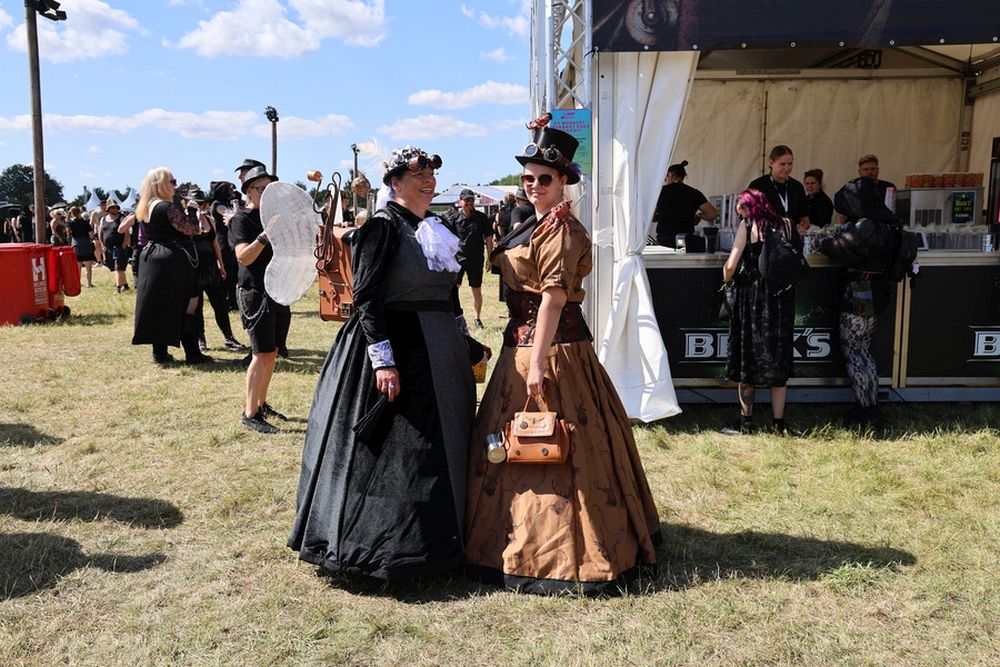
Sunday arrived with an even harder blaze of summer than Saturday. The airfield was already shimmering by late morning, black clothes absorbed every ray of sunlight and, for once, sunscreen felt almost as essential as a festival wristband. Fortunately, M’era Luna has learned how to make heat survivable: water points, cold cocktails, shade where you can find it and the small miracle of ice cream between concerts. Even so, there were moments in the middle of the day when listening to an excellent band became a genuine test of endurance. The music was worth it, but the sun demanded its own share of attention.
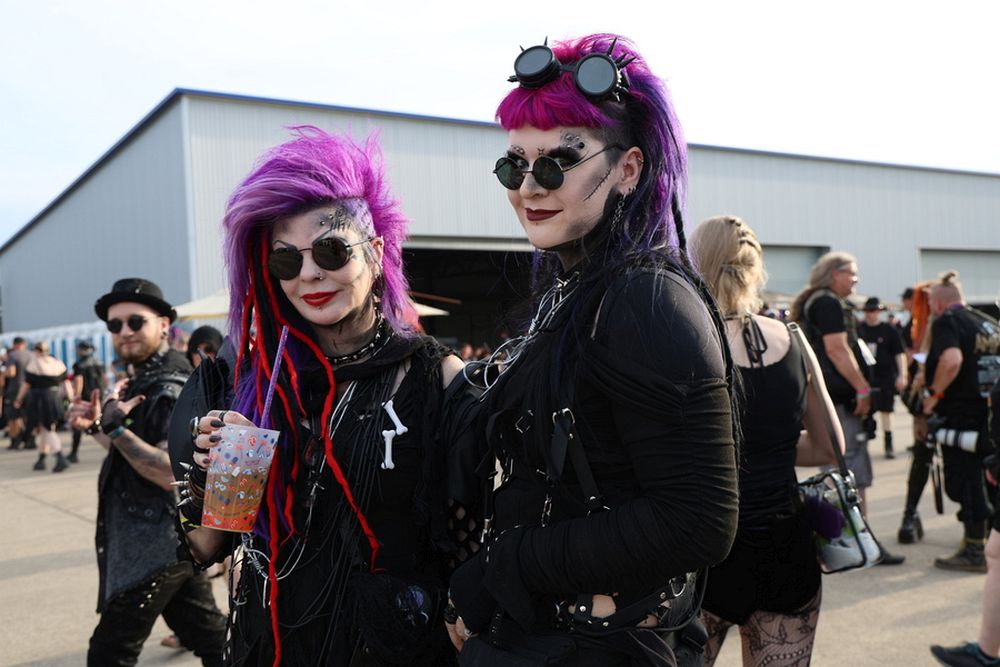
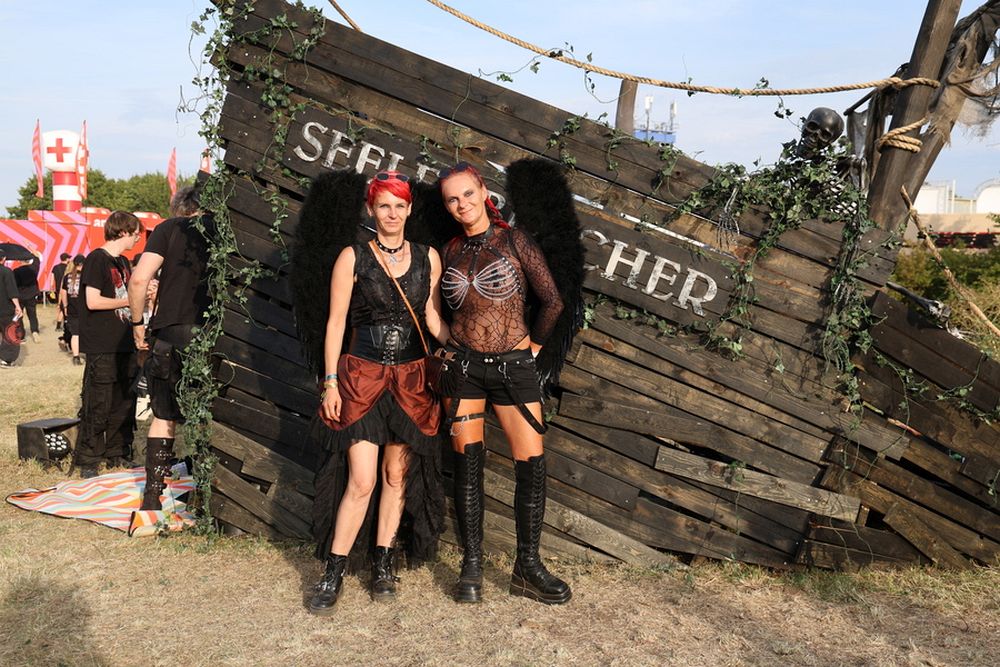
And yet the final day never felt diminished by the temperature. If anything, the heat sharpened the strange contrast that makes M’era Luna so memorable: dark clothes under a merciless blue sky, melancholy songs in bright daylight and thousands of people moving between the two stages as if the whole airfield were one enormous reunion. Friends appeared in the crowd, familiar faces returned from the previous days and the programme kept pulling us from Synthpop to Industrial, from Gothic Rock to Symphonic Metal and Medieval Rock. By the end, the exhaustion was real, but so was the feeling that this final Sunday had given the weekend a completely different emotional colour.
At 11:00, FINAL SELECTION had the difficult task of opening the Main Stage while much of the festival was still waking up. The German band are rooted in Synthpop, but their strength lies in making electronic music feel warm rather than clinical. Melancholic soundscapes, carefully built rhythms and a sense of emotional openness gave the first minutes of the day a surprisingly intimate character. Instead of trying to overwhelm a still-growing audience, FINAL SELECTION drew people in gradually, proving that an early festival slot can work through atmosphere as effectively as volume. Their performance felt like the first pulse of the day: elegant, thoughtful and quietly energetic.
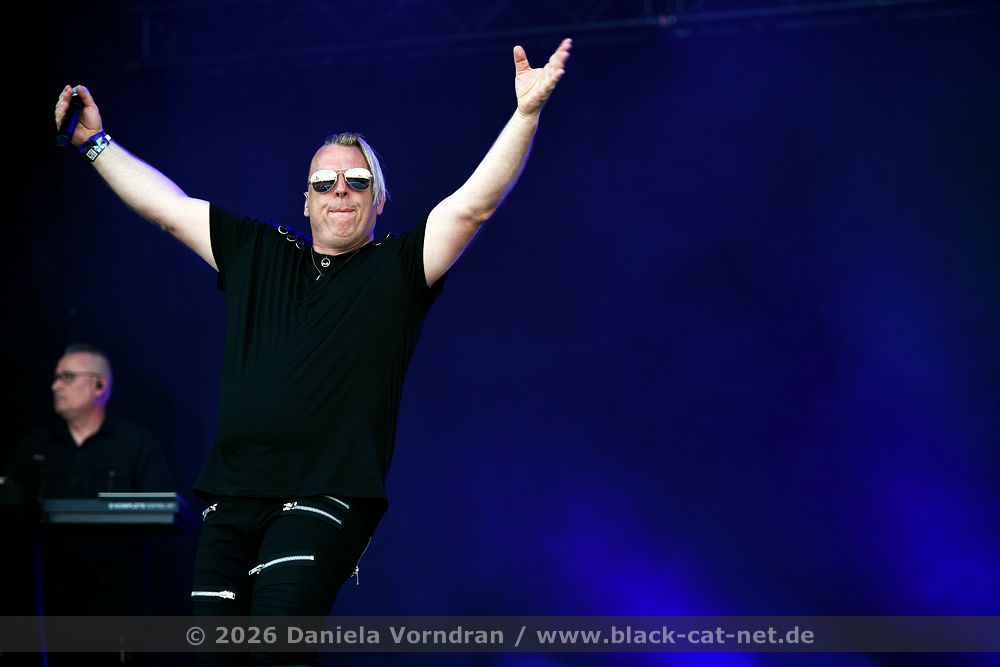
Only twenty minutes later, the Club Stage answered with the opposite kind of awakening. SYNTHATTACK arrived like an alarm siren for anyone still moving slowly. Their mixture of Dark Electro, Industrial, EBM and Aggrotech is built for physical impact: harsh beats, oversized synths, raw vocals and, live, the additional force of drums. Where FINAL SELECTION had opened a door into Sunday with melancholy, SYNTHATTACK kicked it off its hinges. The Club Stage quickly turned into a compact dancefloor, and the contrast between the two opening acts already summed up what M’era Luna does so well - two different languages of darkness existing side by side.
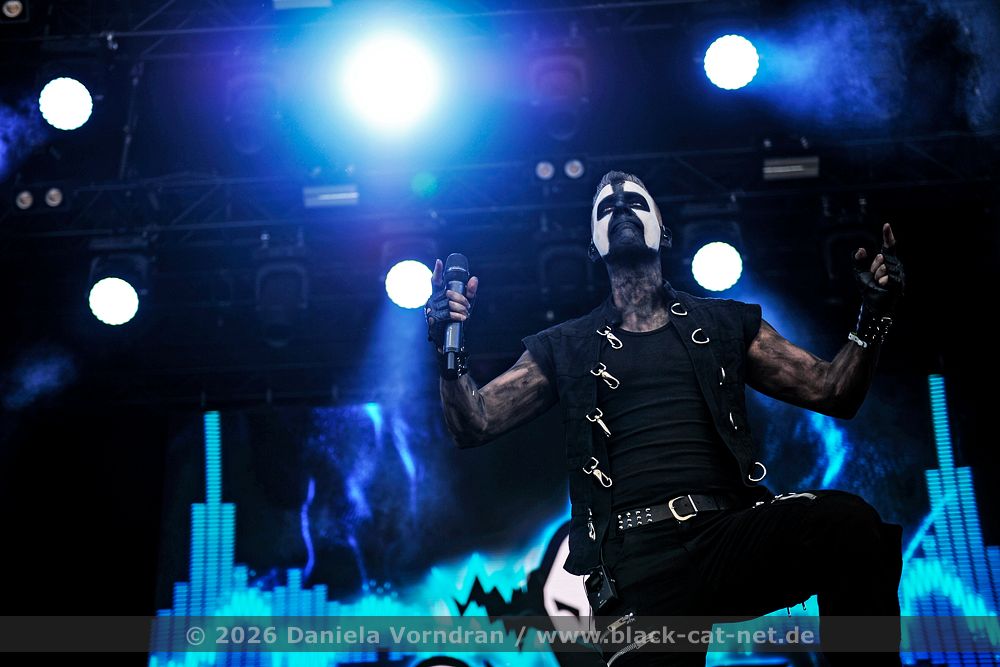
Back on the Main Stage, SOTIRIA (some might remember EISBLUME) changed the temperature of the music even if she could do nothing about the temperature of the air. Her solo material balances modern Pop with darker poetic shades, moving between vulnerability, renewal and inner strength. There is an accessibility to her melodies, but also enough melancholy to make them feel at home in Hildesheim. In the brutal late-morning sun, her warm vocal presence was particularly effective: rather than competing with the festival’s heavier acts, SOTIRIA created a softer emotional space in which the audience could simply listen. It was a graceful reminder that M’era Luna’s identity has never depended on one strict genre border.
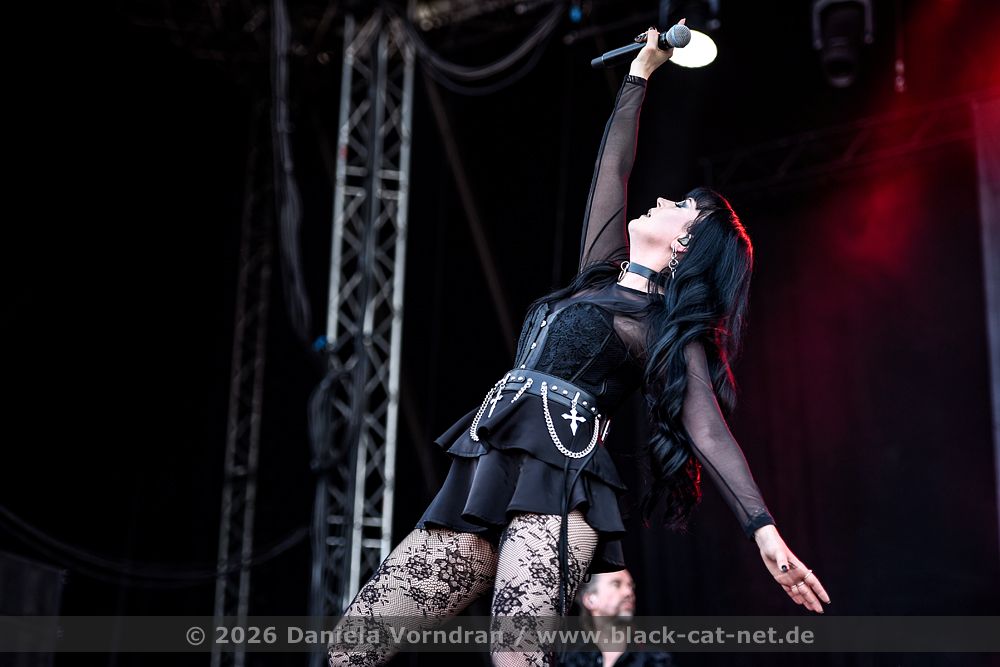
That softness did not last long. At 12:05 the Club Stage was handed over to EISENFUNK, whose music reduces Industrial to its most functional, mechanical elements. Repetitive sequences, hard bass lines and a technoid pulse work like parts of a well-calibrated machine, and live the trio’s precision becomes the whole point. There is little unnecessary decoration in EISENFUNK’s approach: the rhythms arrive, lock into place and push forward. Under the Club Stage roof, away from the most direct sunlight, the effect was almost hypnotic, and the audience responded instinctively. Sometimes the smartest festival programming is simply to give people a beat they cannot stand still to.
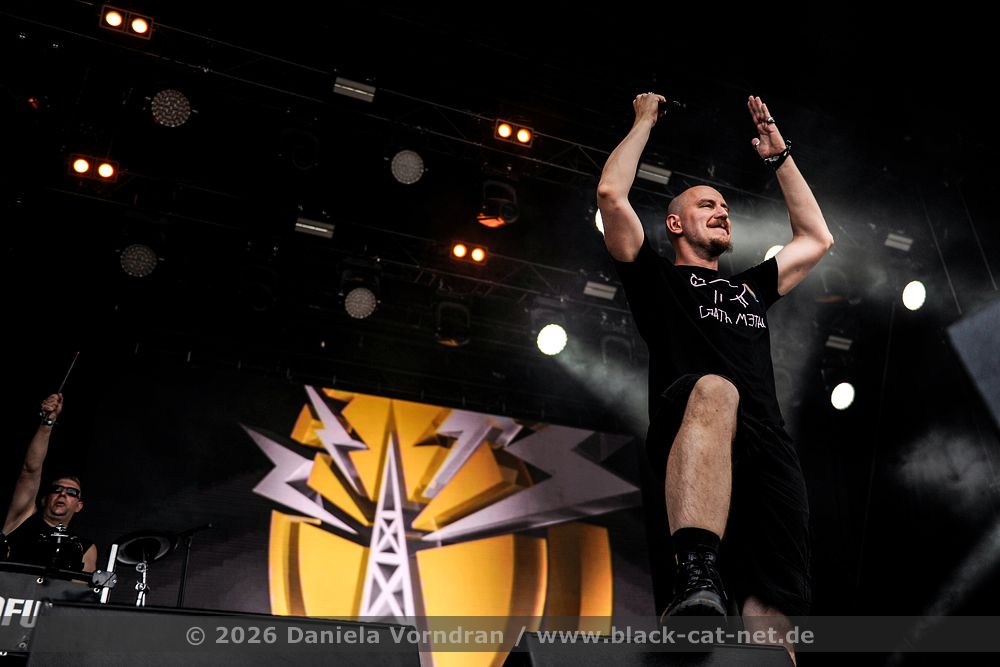
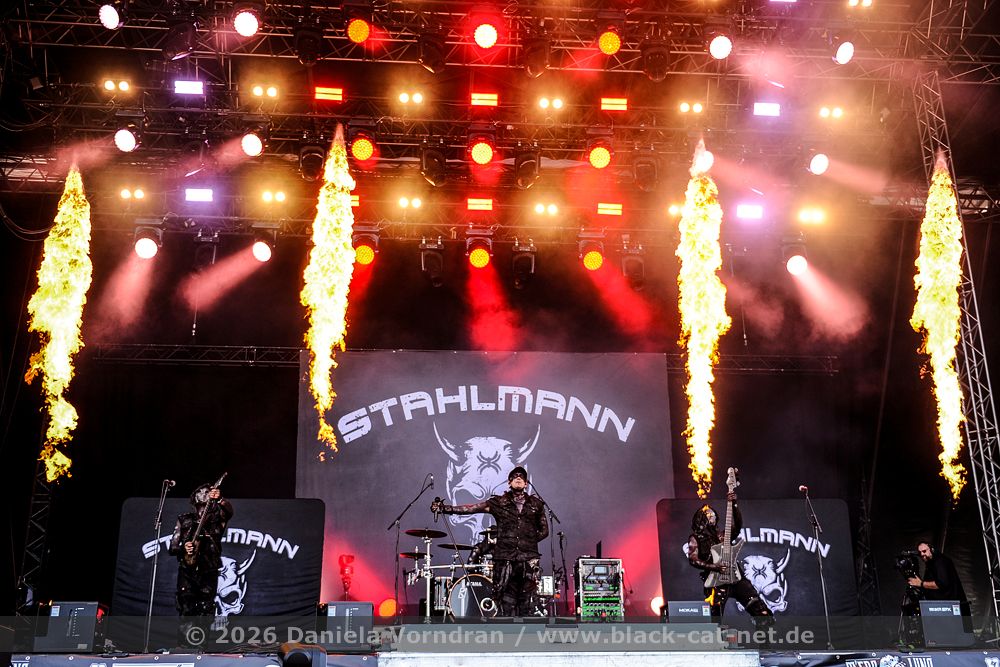
The Main Stage then moved from electronic machinery to the metallic body language of Neue Deutsche Härte. STAHLMANN appeared next with the silver visual identity that has become inseparable from the band: part industrial sculpture, part dystopian theatre. Their combination of staccato guitars, electronic accents, heavy drums and Mart Soer’s dark vocal delivery has always been direct, and in festival conditions that directness works brilliantly. Songs such as ‘Schwarz’ and ‘Süchtig’ landed with exactly the physical weight the crowd expected, while ‘Adrenalin’ felt almost too appropriately titled for a set played beneath a burning midday sun. The audience answered with raised hands, shouted refrains and the kind of collective head movement that makes a field suddenly look like a single organism. STAHLMANN did not bring shade, but they brought enough force to make everyone temporarily forget they needed it. And they brought also a lot of heat with flame jets used extensively.
From there, the day shifted back towards the Club Stage and the glossy darkness of JESUS ON EXTASY. The German project emerged from the mid-2000s wave of Electronic Rock and Industrial-influenced Alternative music, combining distorted guitars, programmed textures, decadent glamour and melodic hooks. Their music has always carried a cinematic, nocturnal quality, which made the bright afternoon setting an amusing contradiction. Yet that contrast also made the set stand out. JESUS ON EXTASY brought a sleeker, more sensual kind of darkness after STAHLMANN’s metallic attack, proving again how quickly Sunday could change its skin from one twenty-minute walk to the next.
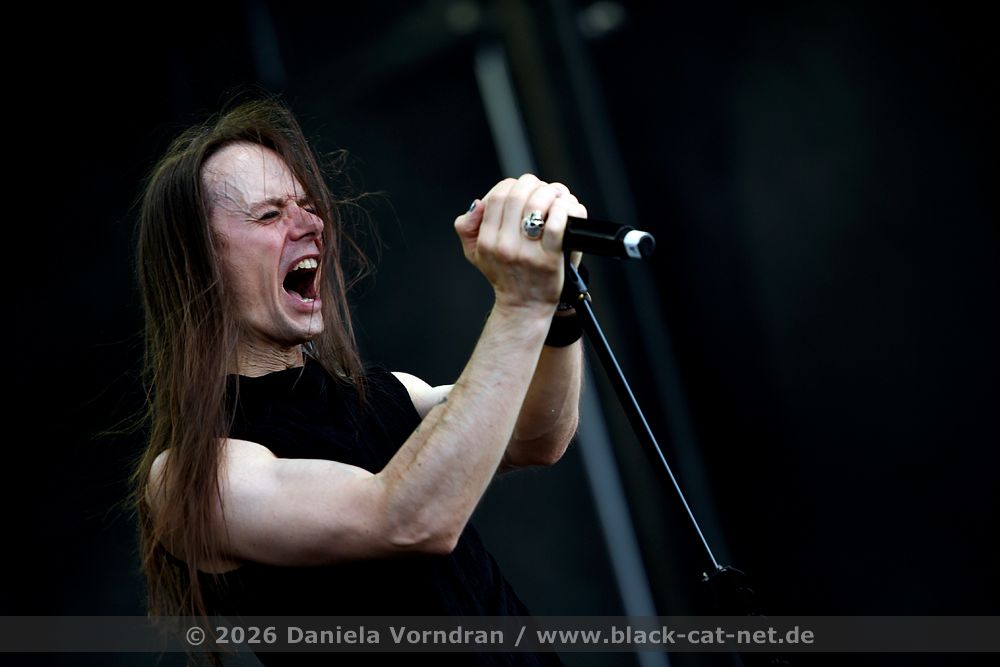
At 13:15, one of the day’s most talked-about performances began. SKYND occupy a very specific territory between Industrial, Dark Electronic music and true-crime storytelling, with songs built around real criminal cases and a stage language that is deliberately unsettling. Several friends of mine had discovered the project only recently and came to the Main Stage specifically to see what the live experience would be like. They were not disappointed.
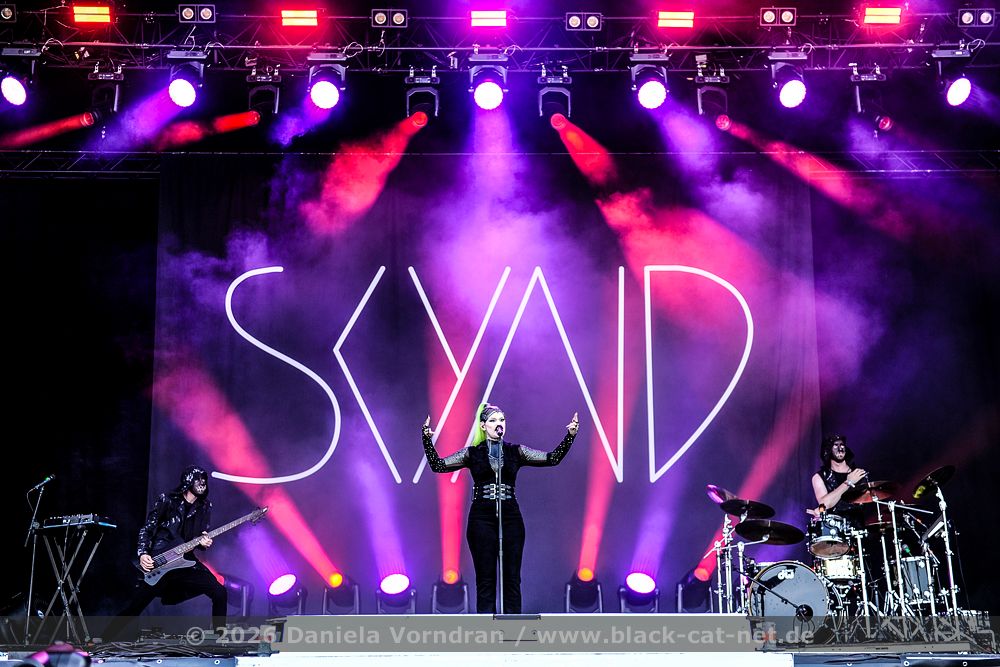
Tracks including ‘Michelle Carter’, ‘John Wayne Gacy’ and ‘Tyler Hadley’ turn documented horror into claustrophobic electronic theatre, while ‘Columbine’ remains one of those pieces that creates discomfort precisely because it refuses to become simple entertainment. SKYND’s altered vocal tones, heavy beats and controlled visual presentation gave the show the atmosphere of a ritual or interrogation rather than a conventional concert. The crowd was fascinated, tense and extremely attentive. It was not a set that invited easy escapism; it asked the audience to stare into something ugly and stay there.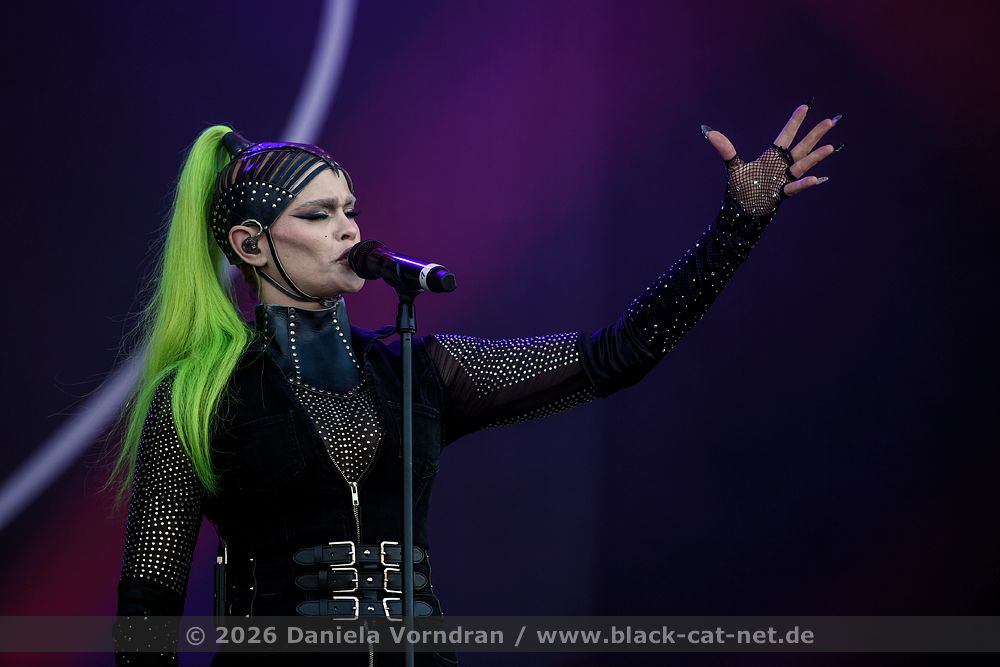
After SKYND’s psychological pressure, THEN COMES SILENCE offered a different form of darkness. For their M’era Luna show, they had some prominent support: Johan Lange of AGENT SIDE GRINDER joined the band on additional keyboards. The Stockholm band draw from Post-Punk, Gothic Rock and Dark Wave, building songs around bass-driven momentum, sharp guitars and the kind of romantic gloom that immediately evokes a night-time club even in broad daylight. Their sound is rooted in tradition without feeling like a museum piece. On the Club Stage, they brought movement and elegance rather than brute force, creating a bridge between the modern intensity of SKYND and the older Gothic lineage that would dominate the next part of the afternoon.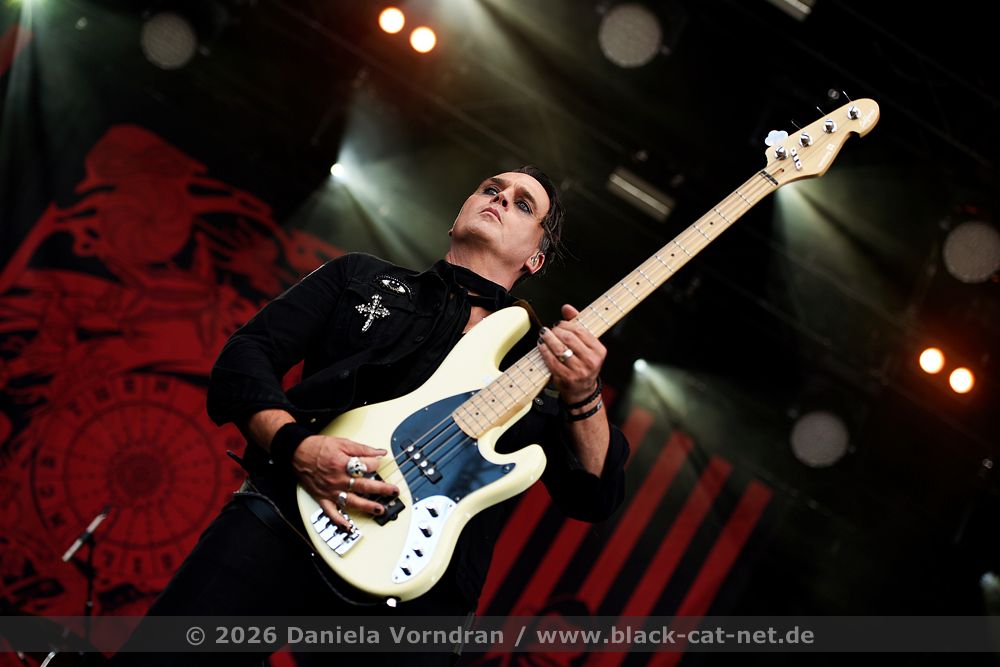
That lineage became personal at 14:15. For many people I know - and for me as well - THE 69 EYES were part of the soundtrack to the beginning of a Gothic journey. The Lost Boys have grown older, of course, but the essential image remains gloriously intact: black leather, sunglasses, dark glamour and Jyrki 69’s instantly recognisable low voice. Appearing on stage Jyrki nowadays looked a lot like Pete Steele of TYPE O NEGATIVE. There is something comforting about that loyalty to their own visual and musical world. THE 69 EYES have spent decades refining their mixture of Gothic Rock, Dark Rock and Rock’n’Roll swagger, and the result now feels less like a style they wear than a place they live in.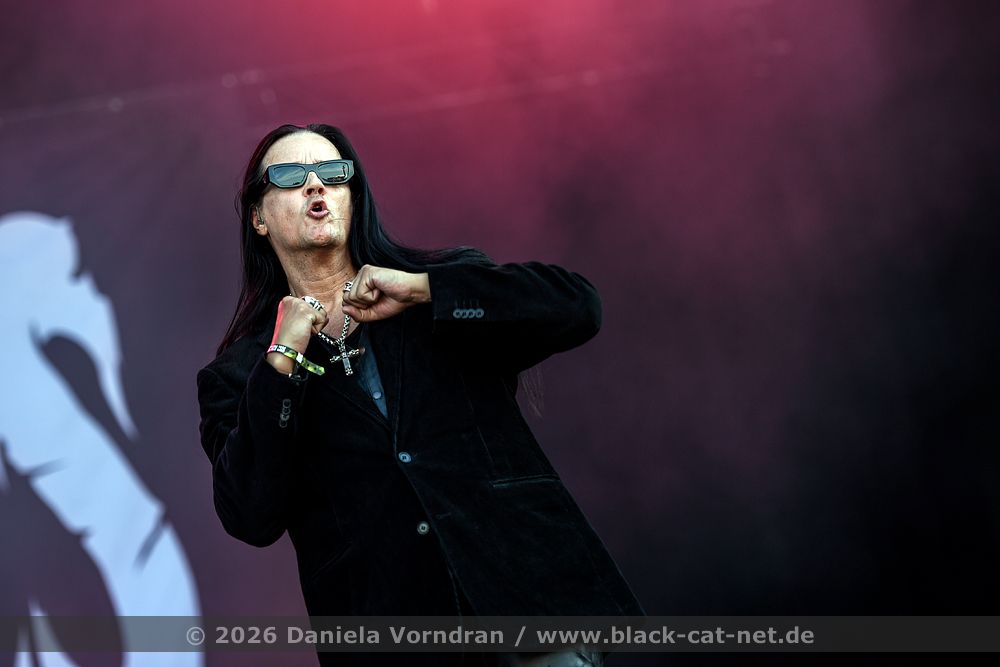
The set travelled through several eras. ‘Wasting the Dawn’, from the 1999 album of the same name, still carries that late-night romantic melancholy that helped define the band’s turn towards Gothic Rock. ‘Brandon Lee’, from ‘Blessed Be’ (2000), remains one of their most enduring dark anthems, while ‘Lost Boys’ from ‘Devils’ (2004) inevitably became the great communal moment: a song that once sounded like a promise of eternal youth now carries an extra layer of affectionate irony when sung by musicians and fans who have shared it for more than twenty years. ‘Dance d’Amour’ from ‘Paris Kills’ (2002) added elegance and nostalgia, and the crowd responded not with the frenzy of a Metal show but with recognition - smiles, raised phones, voices joining the choruses and that unmistakable feeling of meeting an old friend who still dresses exactly the way you hoped they would.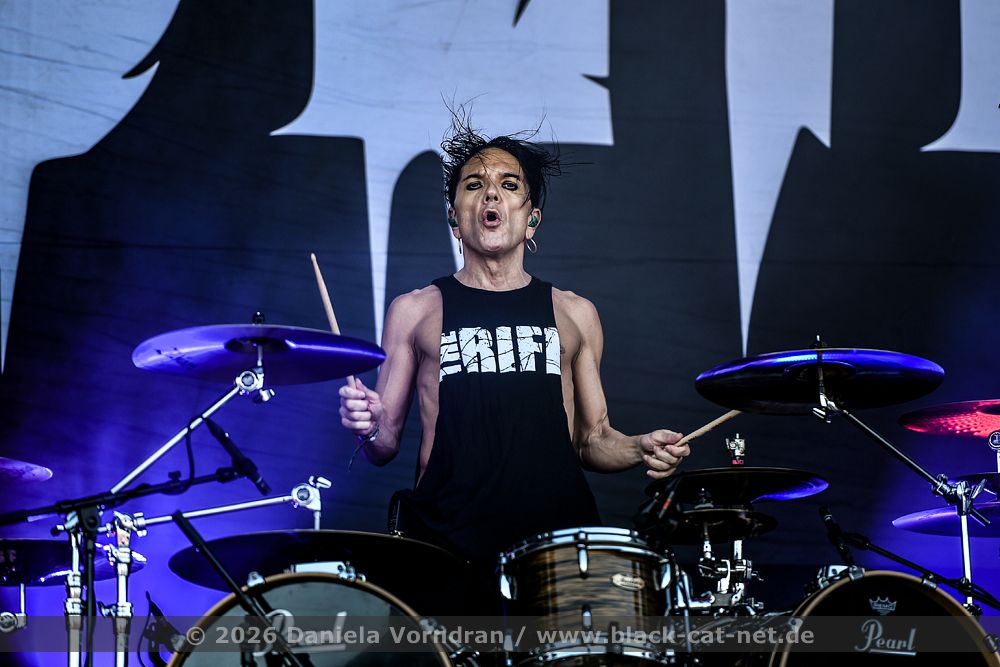
The emotional thread of classic darkness continued almost seamlessly at the Club Stage with CLAN OF XYMOX. Few bands embody Dark Wave so completely. Since the early 1980s, Ronny Moorings and company have moved between Post-Punk, Gothic Rock and electronic melancholy, using delayed guitars, deep synths and hypnotic rhythms to create a sound that feels timeless rather than retro. ‘A Day’, one of the defining early pieces from the self-titled ‘Clan of Xymox’ album (1985), still has the ability to slow the world down around it. ‘Jasmine and Rose’ from ‘Creatures’ (1999) carries a different, more romantic pulse, while later material such as ‘There’s No Tomorrow’ showed that the band have never needed to live entirely in their past. 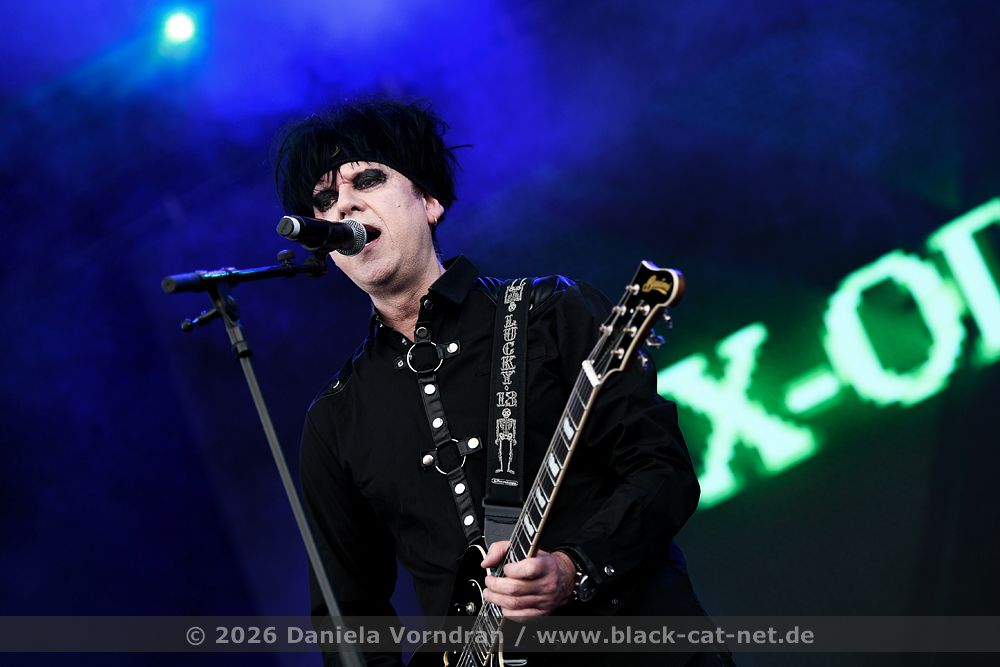
Then came a band for whom objectivity becomes almost impossible. L’ÂME IMMORTELLE are not simply another name on a timetable for me; they are part of a musical family history, a project connected to years of memories, concerts and personal milestones. Long ago it began with ‘5 Jahre’, and hearing the band again at M’era Luna immediately brought that emotional timeline back into focus. Sonja Kraushofer appeared, as always, with a strong sense of theatrical elegance, wearing a beautiful black satin dress - the kind of stage garment made to look timeless rather than fashionable. Thomas Rainer, restless and energetic beside her, remains the perfect counterweight: movement against stillness, urgency against romantic introspection.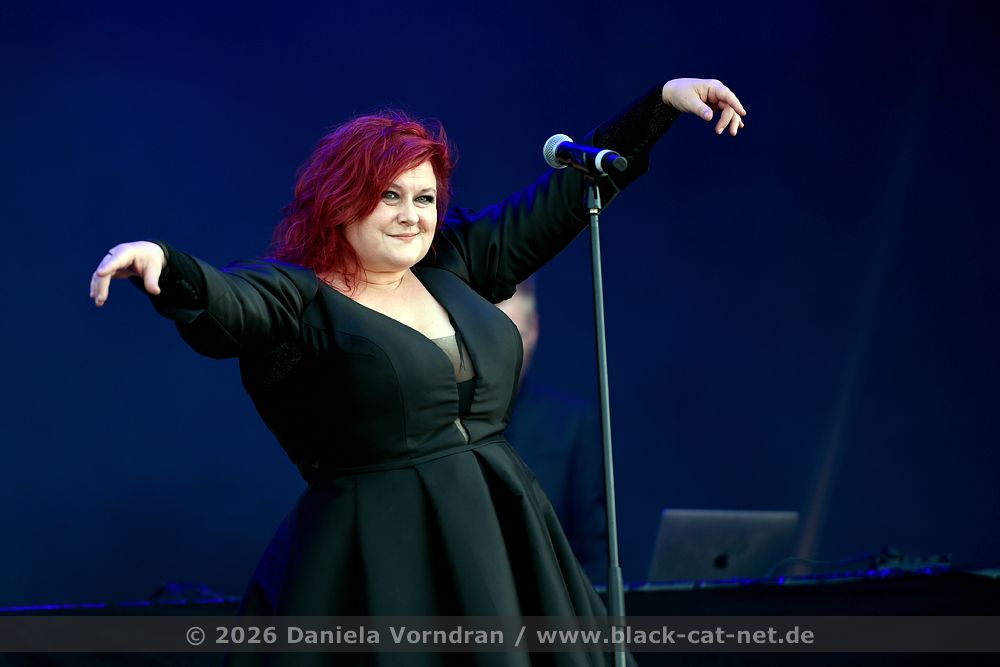
That duality is the core of L’ÂME IMMORTELLE. Their music can move from Dark Wave and electronic intensity into Gothic romanticism without losing its identity. ‘5 Jahre’, associated with the 2004 album ‘Gezeiten’, remains one of those songs that belongs as much to the audience’s memories as to the band’s catalogue; its mixture of longing and dramatic release is almost impossible to hear neutrally after so many years. ‘Bitterkeit’, from ‘In einer Zukunft aus Tränen und Stahl’ (1998), reaches further back into the project’s darker electronic beginnings. Even when newer material enters the set, the emotional architecture stays recognisable: Thomas drives, Sonja dreams, and the space between them becomes the story. This was Gothic music in the sincerest sense - not costume, not parody, but melancholy, romance and devotion transformed into sound.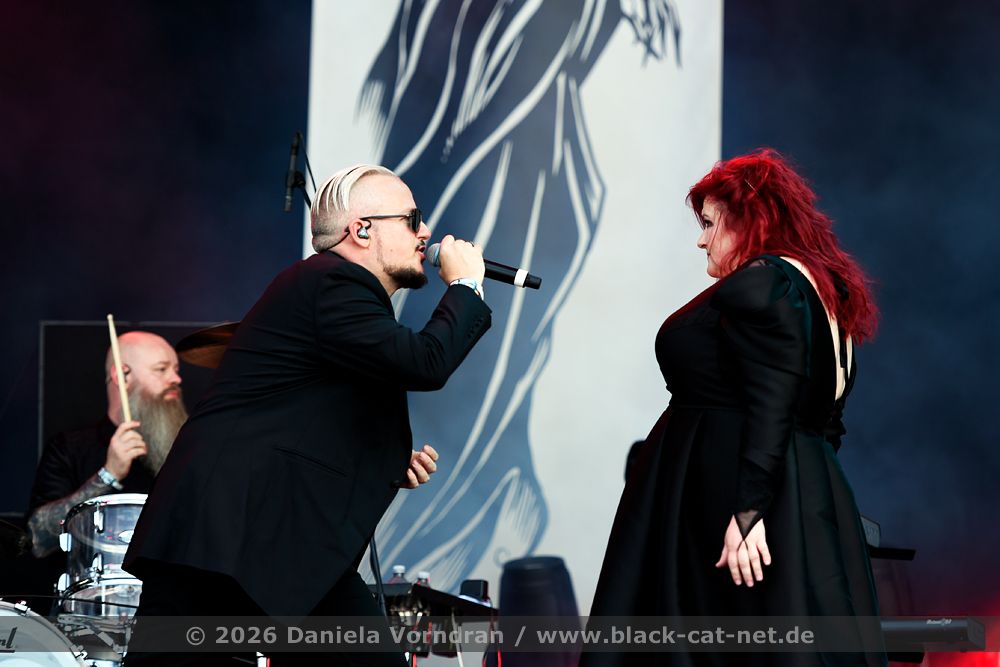
The Club Stage answered that romanticism with the precise emotional machinery of NEUROTICFISH. Sascha Mario Klein’s project has always been unusually good at combining accessible Synthpop and Future Pop structures with anxiety, paranoia and self-analysis. That tension is what makes the songs work: the melodies invite you to dance, while the words frequently refuse to let you relax. ‘Silence’ delivered the familiar balance of sweetness and unease, while ‘Velocity N20’ hit with a more urgent electronic drive. ‘Bring The Noise’ and ‘How To Suffer’ pushed the set towards catharsis rather than simple club pleasure. The audience responded exactly as NEUROTICFISH music seems designed to make people respond - dancing hard, singing along and smiling at lyrics that are often anything but cheerful.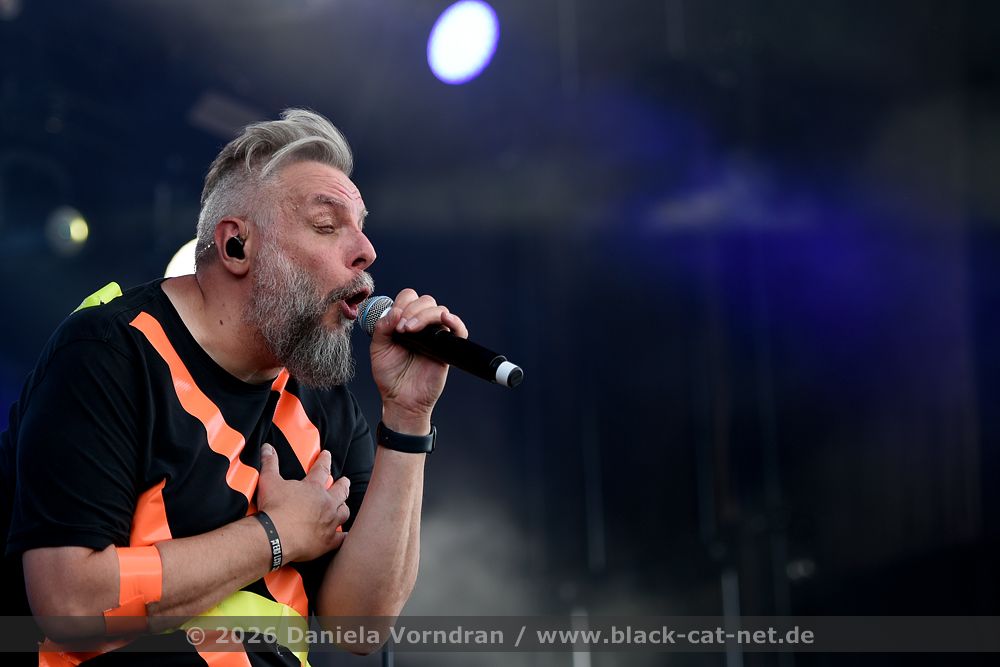
At 16:30 the Main Stage belonged to FLOOR JANSEN, and by then the heat had still not properly released its grip. Fortunately, neither had she. Jansen’s solo career began taking real shape after her breakthrough on Dutch television in 2019 and the first solo tours that followed, before she released the album ‘Paragon’ in 2023. With NIGHTWISH currently on a break from live activity, she has used the space intelligently, developing her own catalogue rather than simply waiting for the next band cycle. In 2026 that solo chapter became heavier again, with the new single ‘Run’ pointing towards a more direct, metallic sound.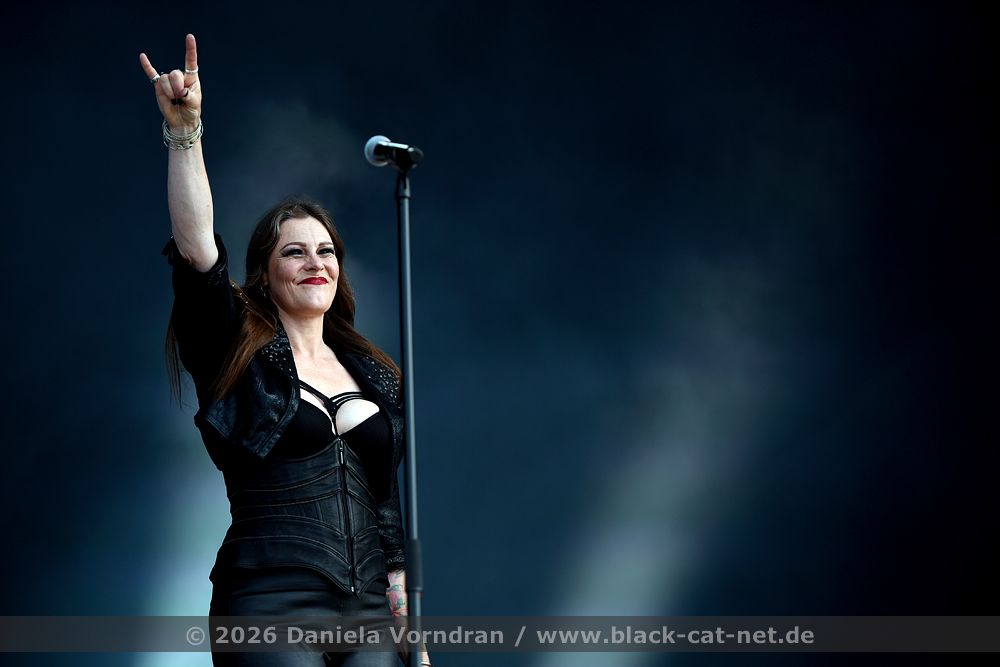
Her M’era Luna set was a perfect demonstration of how broad her history already is. Solo material such as ‘Invincible’, ‘Fire’ and ‘Run’ sat beside songs from earlier bands and, crucially, several NIGHTWISH favourites. ‘Noise’ came from ‘Human. :II: Nature.’ (2020), ‘Amaranth’ from ‘Dark Passion Play’ (2007) and ‘Nemo’ from ‘Once’ (2004). Each song triggered a different wave of recognition, but ‘Nemo’ in particular seemed to open a collective memory across the field. 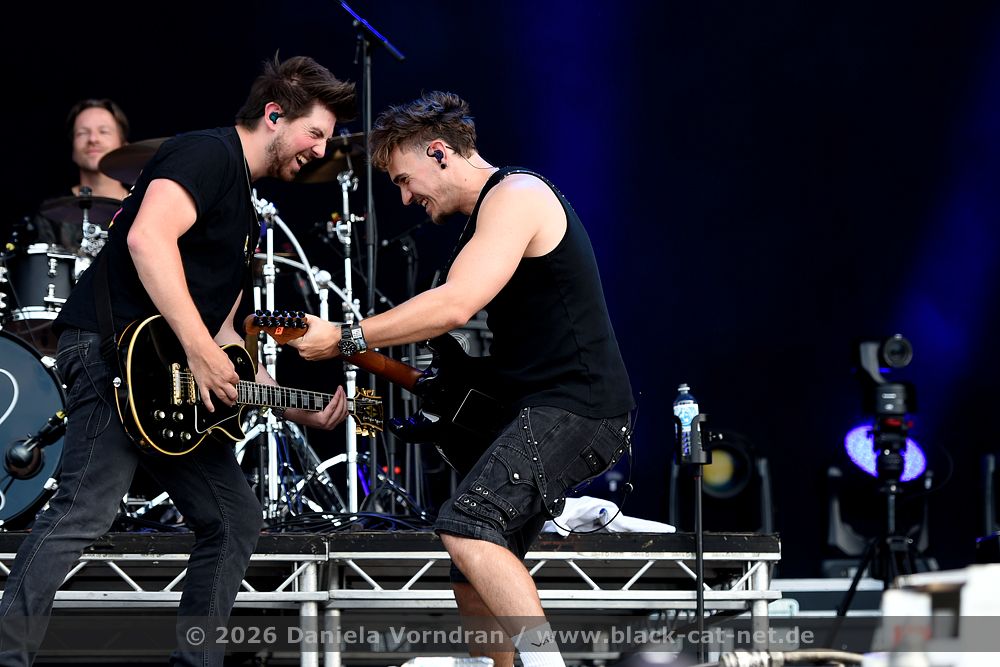
She also reached back to REVAMP with ‘Wolf and Dog’ and to AFTER FOREVER with ‘Face Your Demons’, turning the set into a compressed history of her career rather than a single-project showcase. Vocally she was extraordinary: power without strain, precision without coldness, and enough personality to make even familiar songs feel newly alive. The sun was still merciless, but FLOOR JANSEN set the Main Stage on fire in a completely different sense. She was, quite simply, unstoppable.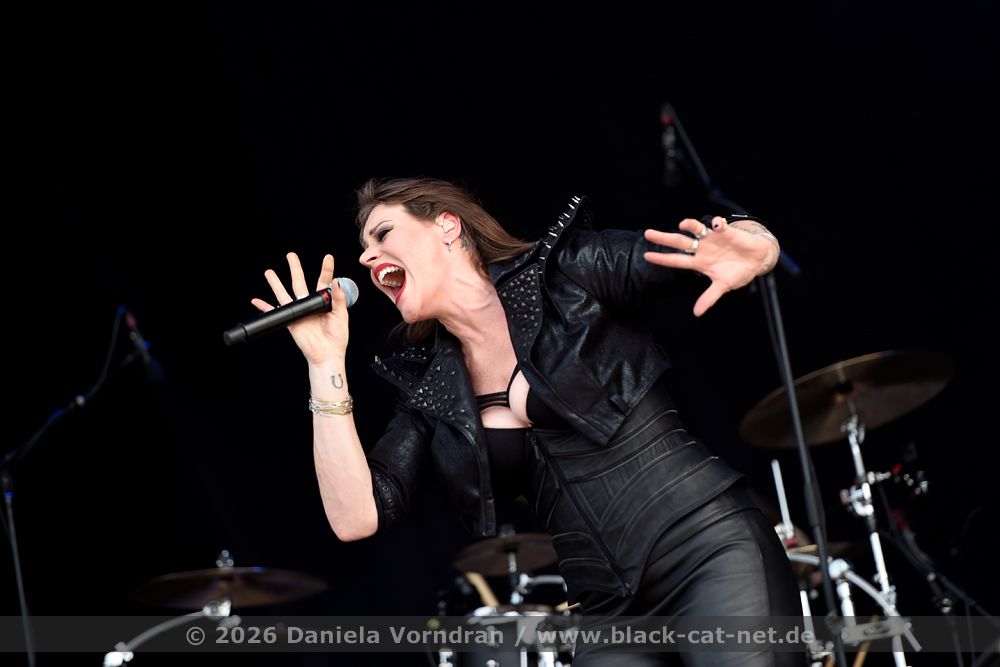
As soon as that vocal storm ended, the Club Stage offered another artist whose career has been built on constant reinvention. I was genuinely surprised to realise that AESTHETIC PERFECTION have existed for more than a quarter of a century. Daniel Graves created the project in 2000, but many of us discovered it much later, during the pandemic years, when livestreams became a substitute for clubs and concerts and unexpectedly created new forms of connection. Those streams were also how we got to know Daniel a little better, and away from the aggressive stage persona he proved to be an exceptionally warm, approachable person.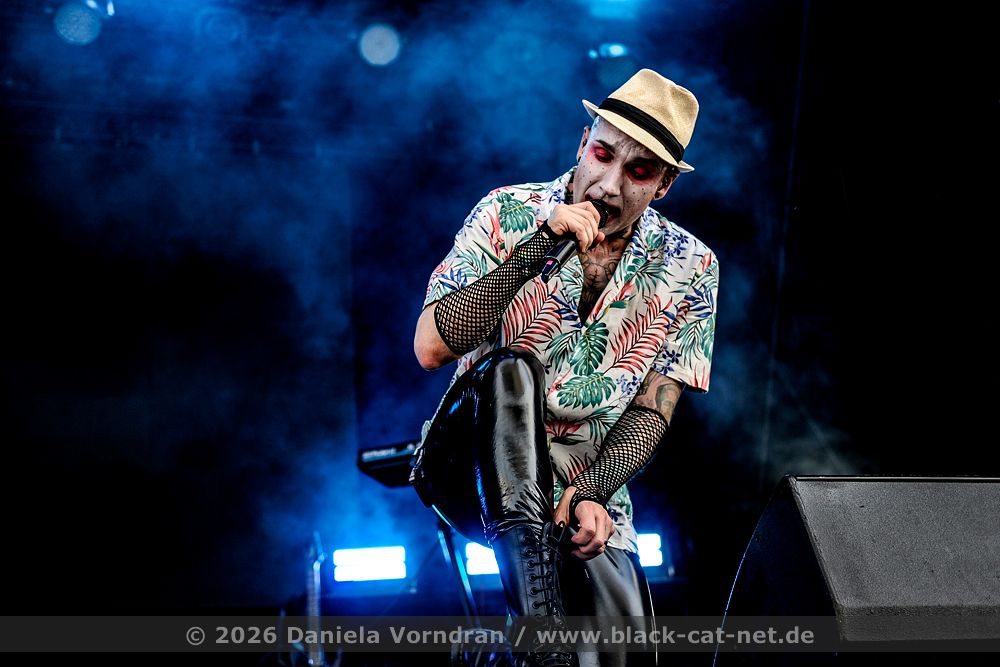
Musically, AESTHETIC PERFECTION have long since outgrown a simple Aggrotech label. The modern sound is better described as Industrial Pop: heavy electronic production, sharp hooks, theatrical vocals and an instinct for turning provocation into something danceable. ‘Gods & Gold’ brought swagger and drama, ‘S E X’ leaned into the project’s shameless, physical side, while ‘Summer Goth’ felt almost comically perfect for a scorching Gothic festival afternoon. ‘We Bring the Beat’ did exactly what its title promised, and ‘Spit It Out’ transformed frustration into a communal shout. The crowd reacted with delighted aggression - dancing, jumping, laughing and giving Graves the energy back as fast as he could throw it from the stage.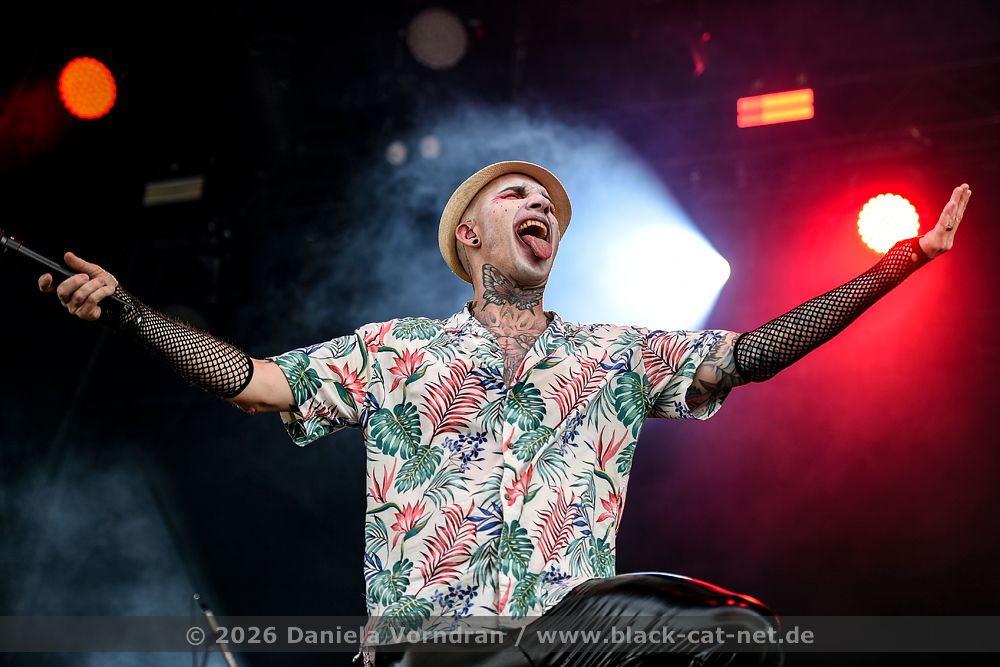
From that modern Industrial Pop intensity, the Main Stage moved into something far more monumental. LACRIMOSA are not merely veterans of the Gothic scene; Tilo Wolff and Anne Nurmi have created a musical world so distinctive that genre labels such as Gothic, Symphonic Metal, Dark Wave and Rock often feel too small. I was especially happy to see Anne back on stage beside Tilo, looking well and fully present again. Their partnership is part of the emotional identity of LACRIMOSA, and seeing them together restored a familiar balance to the stage.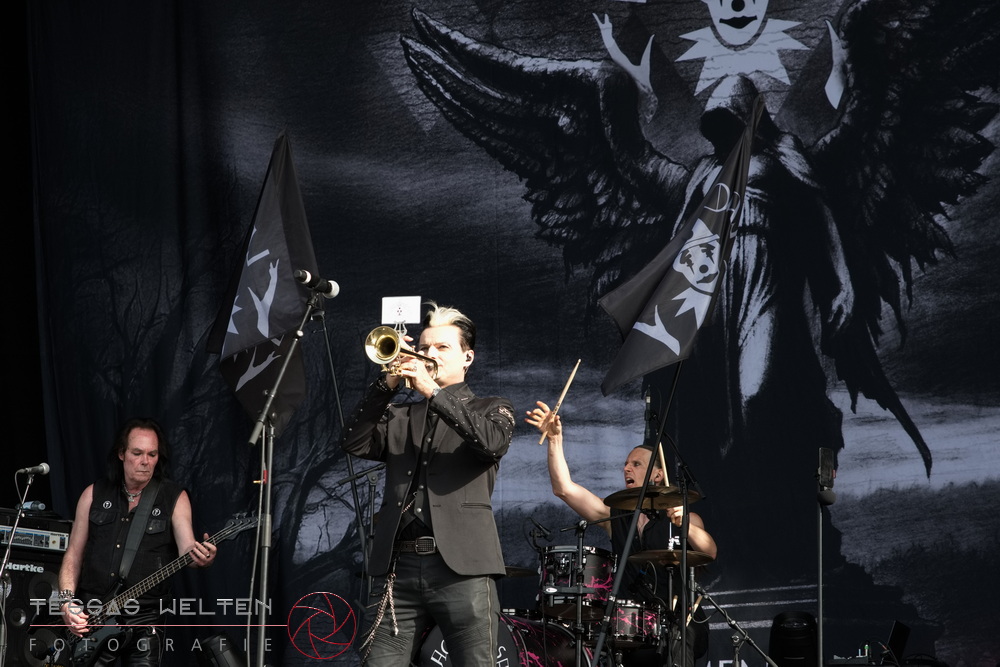
The set was a genuine dialogue between eras. Early landmarks such as ‘Schakal’, originally released as a single in 1994 and later included on ‘Inferno’ (1995), stood beside ‘Not Every Pain Hurts’ from ‘Stille’ (1997), ‘Alleine zu zweit’ from ‘Elodia’ (1999) and ‘Der Morgen danach’ from ‘Fassade’ (2001). ‘Lichtgestalt’ and ‘Kelch der Liebe’ represented the 2005 album ‘Lichtgestalt’, while ‘Rote Sinfonie’ reached into ‘Revolution’ (2012).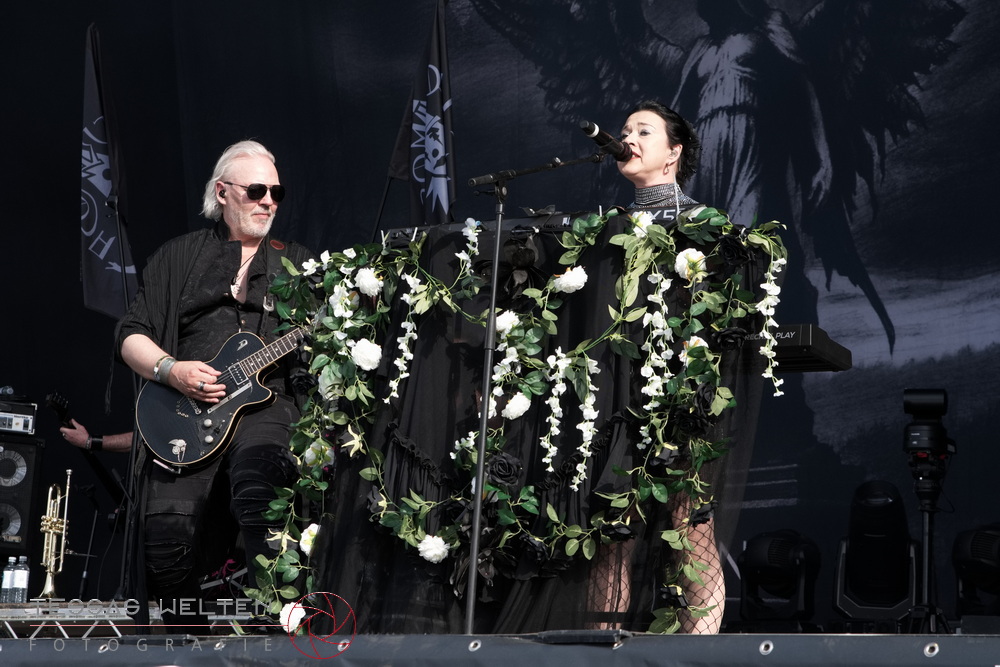
At the same time, the performance made space for the newest chapter: ‘Avalon’, ‘Dark Is This Night’ and ‘Punk & Pomerol’ all come from ‘Lament’ (2025), an album that shows LACRIMOSA still expanding their orchestral and emotional vocabulary rather than simply replaying history. The audience treated the older songs like sacred texts and the newer ones with concentrated attention. There were raised hands, closed eyes, voices singing the German refrains and long moments when the field felt less like a festival audience than a congregation. A LACRIMOSA concert remains theatre, confession and symphony at once.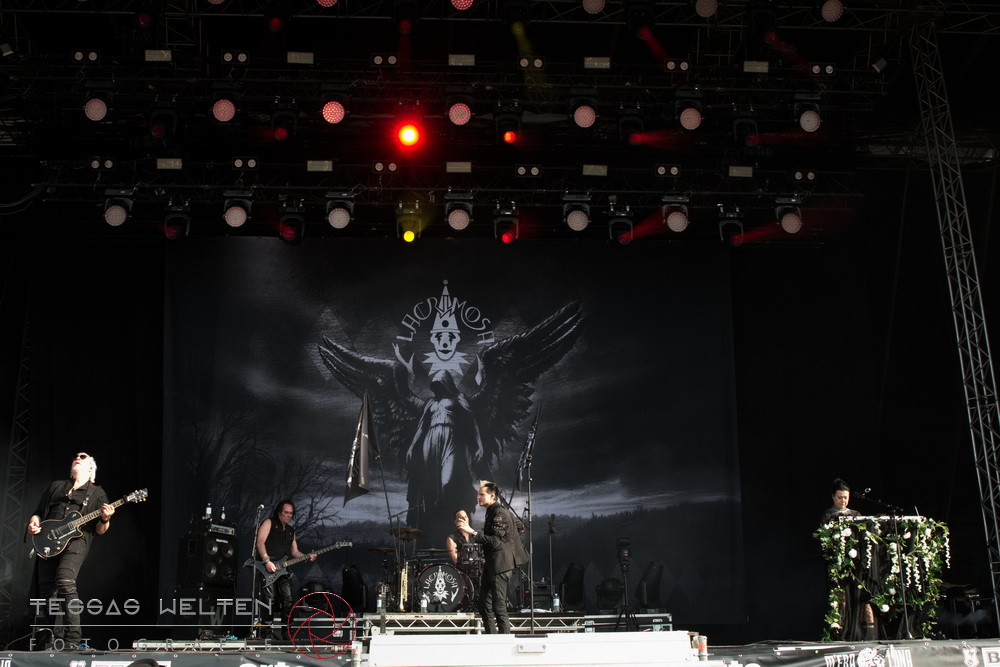
The atmosphere could hardly have changed more abruptly when DIE KRUPPS took control of the Club Stage. If LACRIMOSA turn darkness into romantic grandeur, DIE KRUPPS turn it into steel. As pioneers of Industrial and later Industrial Metal, they helped create a vocabulary that countless Electronic, Metal and Neue Deutsche Härte acts would build upon. Their live sound is physical: programmed rhythms collide with Thrash-influenced guitars, metallic percussion and Jürgen Engler’s confrontational delivery.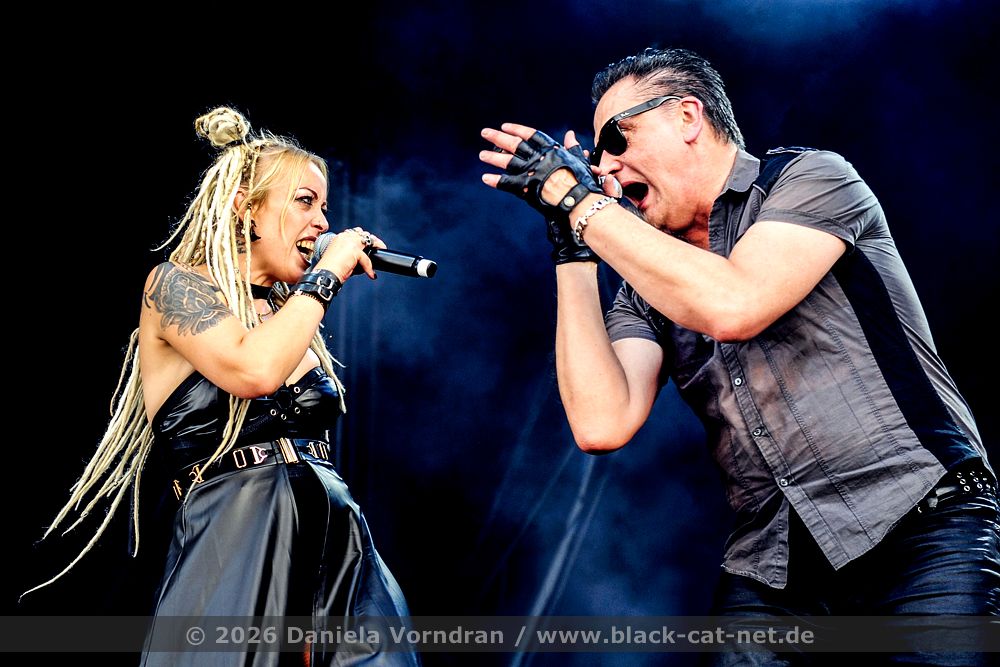
‘Nazis auf Speed’ hit with its characteristic furious momentum, while ‘Fatherland’ remains one of those songs whose severe rhythm and chant-like structure seem made for a festival crowd. ‘Metal Machine Music’ practically functions as a manifesto, and the band’s version of ‘Der Amboss’ connected their own industrial aesthetic to an earlier piece of European electronic history. Liz van den Acker joined Jürgen Engler on vocals for this song and made it even more special. By this point the sun was finally beginning to lose some of its cruelty, but DIE KRUPPS replaced solar heat with mechanical heat. The Club Stage crowd responded with fists in the air, bodies in motion and the satisfied expression of people being sonically hit by exactly the machine they came to stand in front of.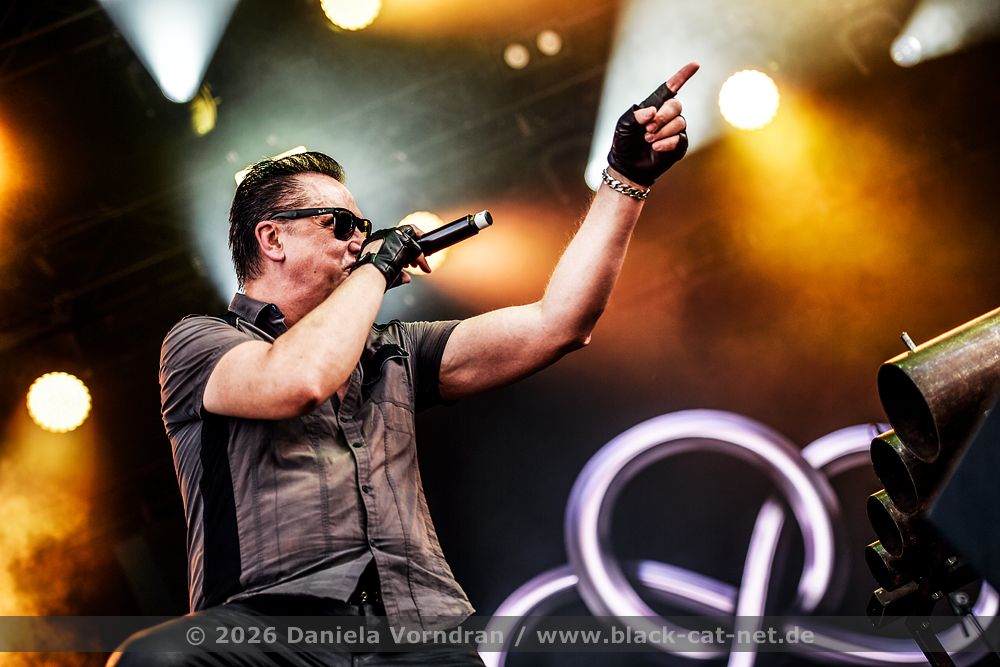
Meanwhile, the Main Stage shifted from industrial steel to one of electronic Pop’s most influential catalogues. OMD - ORCHESTRAL MANOEUVRES IN THE DARK - helped define Synthpop from the late 1970s onwards by proving that synthesizers could be experimental, intelligent, melodic and emotionally direct at the same time. Their appearance at M’era Luna was a beautiful reminder that much of the Dark and Alternative electronic scene grew from roots that were once simply called New Wave or electronic Pop. The set was a masterclass in recognisable melodies.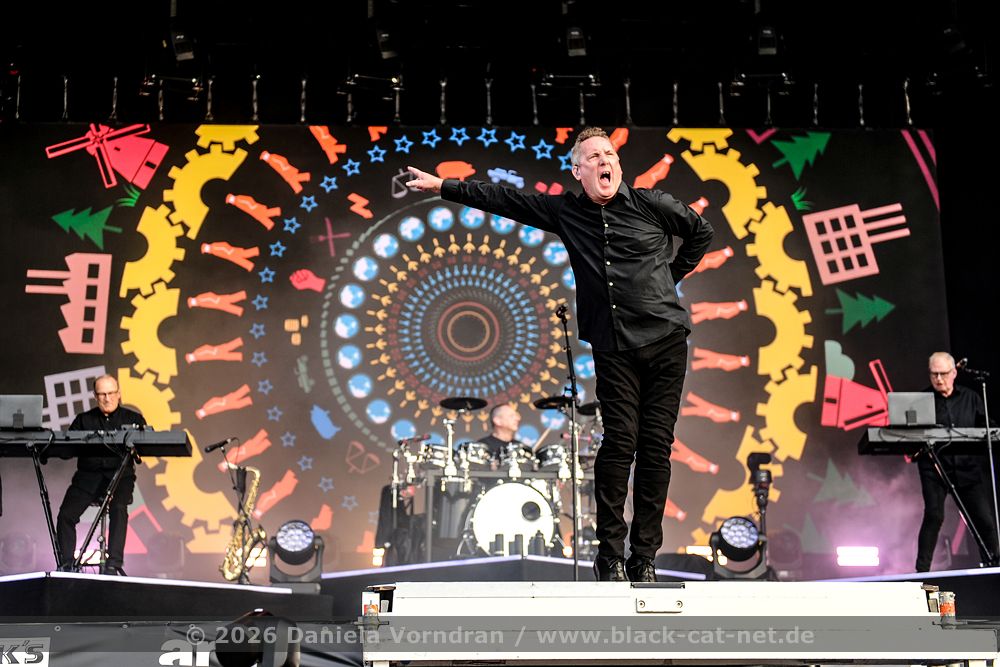
‘Electricity’ still sounded startlingly alive, its minimal electronic momentum carrying the same futuristic optimism that made it radical in the first place. ‘Messages’ turned the field into a singalong, while ‘Joan of Arc (Maid of Orleans)’ brought stately melancholy and one of the most distinctive synth lines of the evening. ‘If You Leave’ added cinematic nostalgia, ‘Sailing on the Seven Seas’ increased the physical energy and ‘Enola Gay’ delivered the inevitable final explosion of recognition. What was striking was how little the songs felt like museum pieces. The audience included people who had lived with them for decades and younger listeners who know the vocabulary of Synthpop through later generations, and both groups reacted with the same joy. OMD made history feel present tense.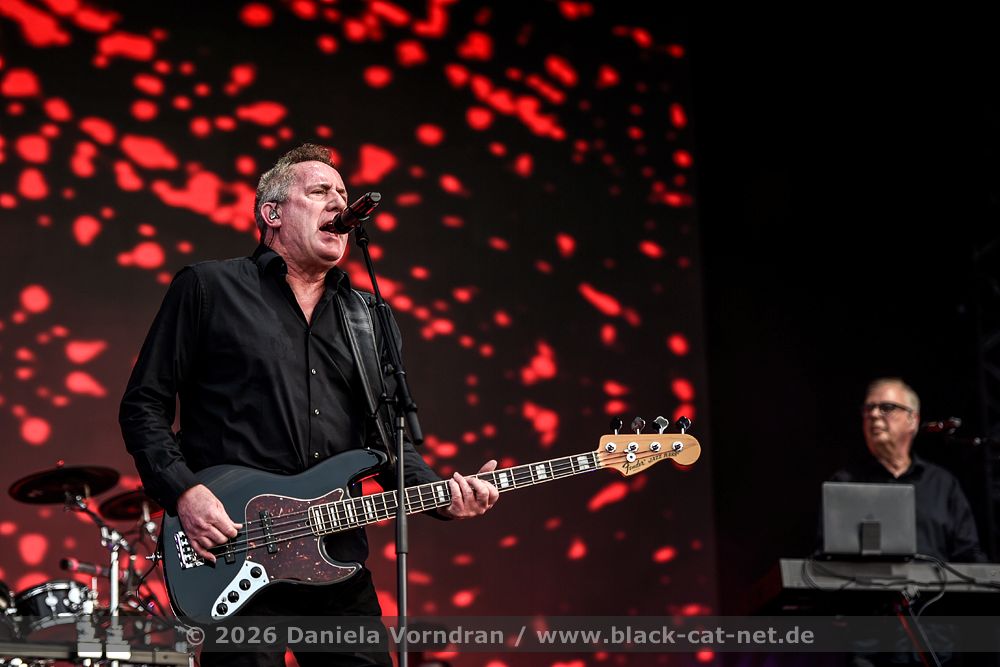
Then, at 20:15, came the performance I approached with more than fifteen years of personal history behind it. My connection with IAMX reaches back through years of interviews, reviews and concerts, and even further to Chris Corner’s first major band, SNEAKER PIMPS. With Corner, familiarity never becomes predictability. His music, visual language and performance art keep changing shape; every era seems to dismantle the previous one and rebuild it in a sharper, stranger form. He remains one of those artists who often appears to be working half a step ahead of the moment around him - part musician, part visual artist, part noir provocateur. His work is not designed to be universally comfortable. It asks to be entered, understood and felt on its own frequency.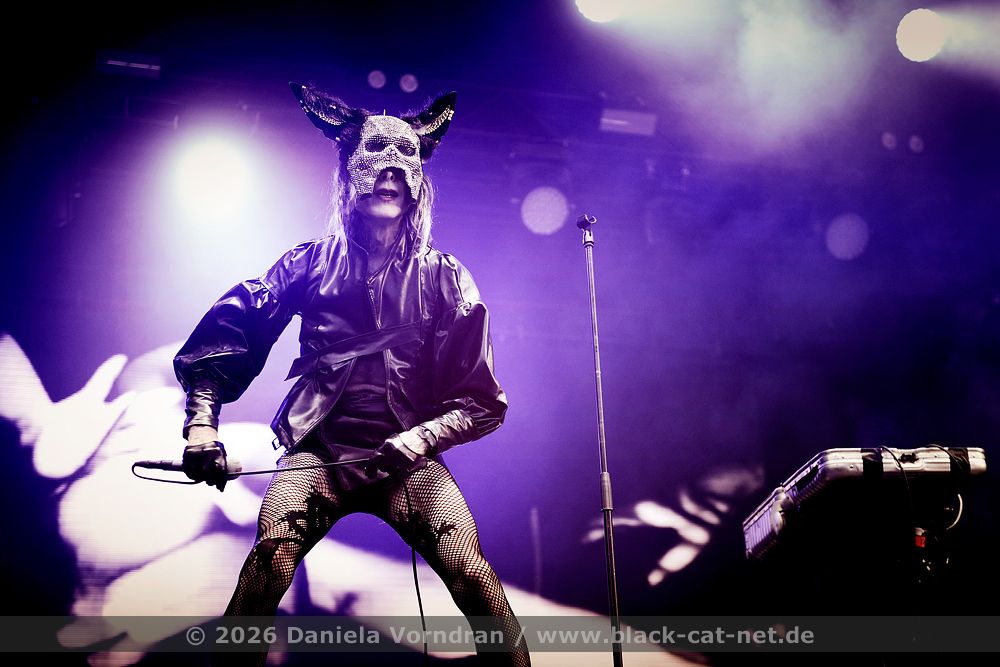
The recent change in the live band initially made that world feel uncertain. The news that Janine Gezang was leaving shocked many long-time followers because her presence had become so closely associated with IAMX on stage. Replacing such a familiar figure seemed almost impossible. Yet the arrival of Gözde Düzer - the artist behind AUX ANIMAUX - has created a new chemistry rather than an imitation of what came before. Düzer, born in Istanbul and based in Stockholm, founded AUX ANIMAUX in 2015 and developed a sound around Dark Wave, Gothic and what she calls Hauntwave, often using bass, electronics and theremin. In the current IAMX live line-up she brings backing vocals, bass and theremin, and the fit feels increasingly natural: not a replacement of identity, but the beginning of another chapter.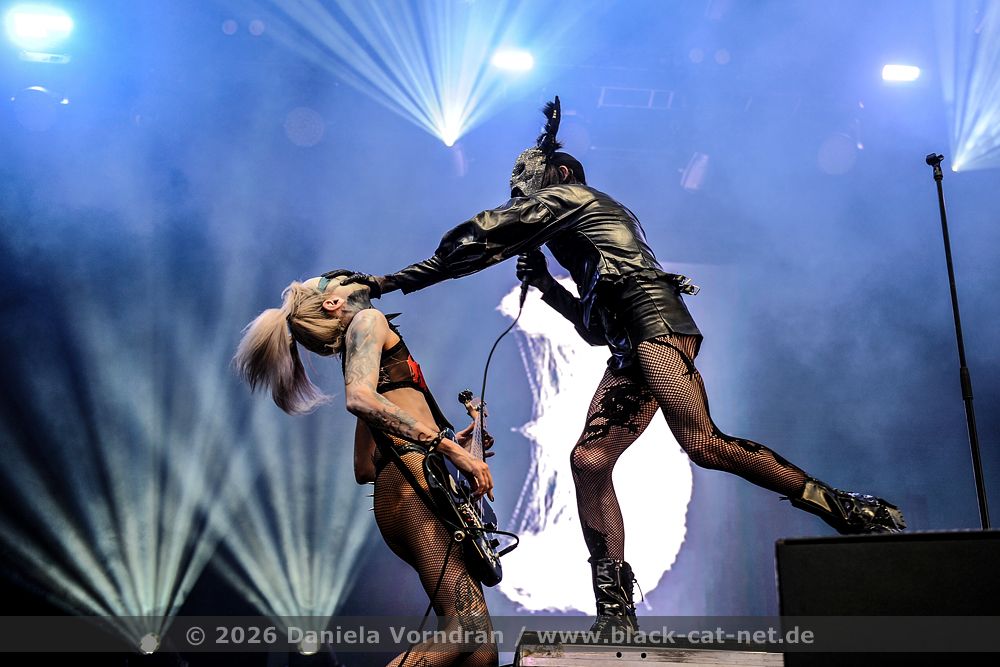
The M’era Luna set confirmed that chapter with force. ‘The X ID’ and ‘Disciple’ established a hard, ceremonial pulse, while ‘After Every Party I Die’ reached back to the decadent emotional theatre that made early IAMX so addictive. ‘I Come With Knives’ remains one of Corner’s great live weapons, simultaneously sensual and threatening, and ‘Happiness’ turned the Club Stage into a wave of voices and raised arms. ‘Spit It Out’ and ‘The Alternative’ carried the familiar rebellious charge, while newer songs such as ‘Sailor’, ‘Aphrodisiac’, ‘Break the Chain’ and ‘Exit’ showed how restless the project still is. Chris was magnificent - theatrical without losing intimacy, severe one second and suddenly radiating affection the next. He sent love into the room with every gesture, and the fans threw it back twice as hard. The exchange felt less like applause than a current running in both directions.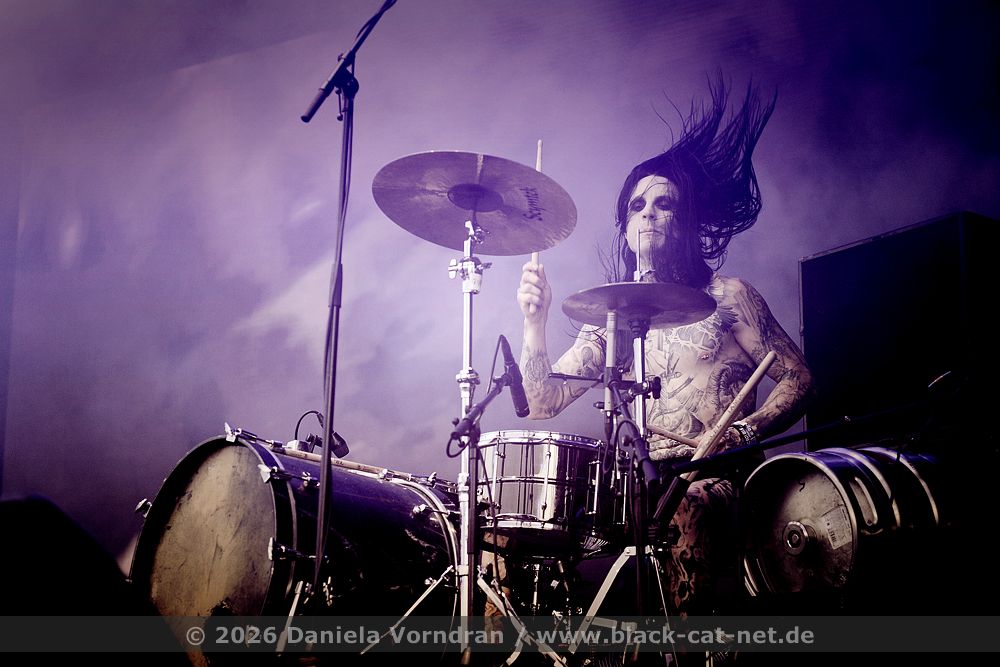
There was barely time to recover before the Main Stage prepared the final great gathering of the weekend. At 20:45 SALTATIO MORTIS arrived as headliners, and, much like IN EXTREMO the night before, they demonstrated why Medieval Rock is so perfectly built for open-air festivals. This is not Gothic music in a narrow stylistic sense, but at M’era Luna strict borders have never mattered as much as atmosphere, history and the ability to unite a field full of people. SALTATIO MORTIS do that almost effortlessly. Bagpipes, shawms, guitars, drums, huge choruses and Alea’s instinctive connection with the audience turn a concert into a communal celebration within minutes.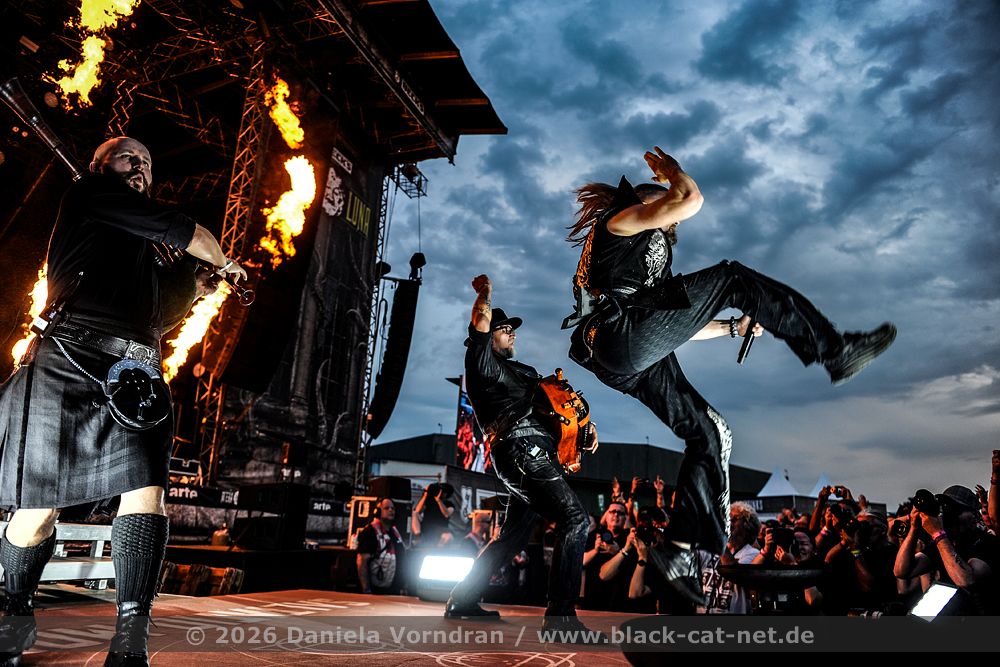
Their set mixed recent material with established festival anthems. ‘Finsterwacht’, ‘Loki’ and ‘Heimdall’ draw from the band’s recent fascination with mythic and fantasy worlds, with ‘Finsterwacht’ giving its name to the ambitious 2024 concept album created around the universe of ‘The Dark Eye’. ‘Wo sind die Clowns’ brought the band’s more pointed, socially observant side, while ‘Prometheus’ remains a classic statement of rebellion.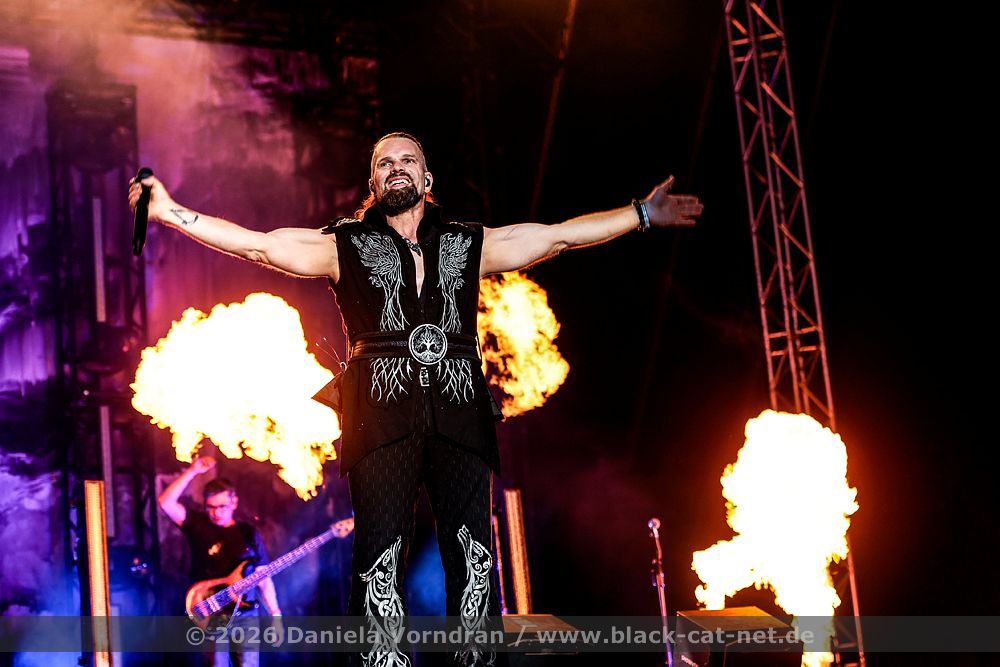
Their versions of ‘My Mother Told Me’ and ‘Valhalla Calling’ transformed the field into a choir of would-be Vikings, and ‘Spielmannsschwur’ carried the emotional weight of the band’s identity as modern minstrels. ‘Ich habe keine Angst’, ‘Ich schrei deinen Namen in die Nacht’, ‘Tanz der Tausend Klingen’, ‘Vogelfrei’, ‘Keine Regeln’ and ‘Für immer jung’ kept the momentum high enough that the size of the crowd seemed to grow rather than thin as the night went on. This is what SALTATIO MORTIS do best: they make thousands of people feel like participants rather than spectators.












































































And so the third and final day ended not in quiet melancholy but in celebration. Three days of arrivals, side events, friendships, heat, black clothes, cold drinks, exhausted feet and an almost absurd amount of music had condensed into one last view of the M’era Luna field after dark. Sunday had moved from intimate Synthpop through Industrial pressure, Gothic memory, Dark Wave elegance, Symphonic drama, electronic Pop history and finally into a huge Medieval Rock finale. The programme was diverse, sometimes contradictory, and exactly for that reason unmistakably M’era Luna.
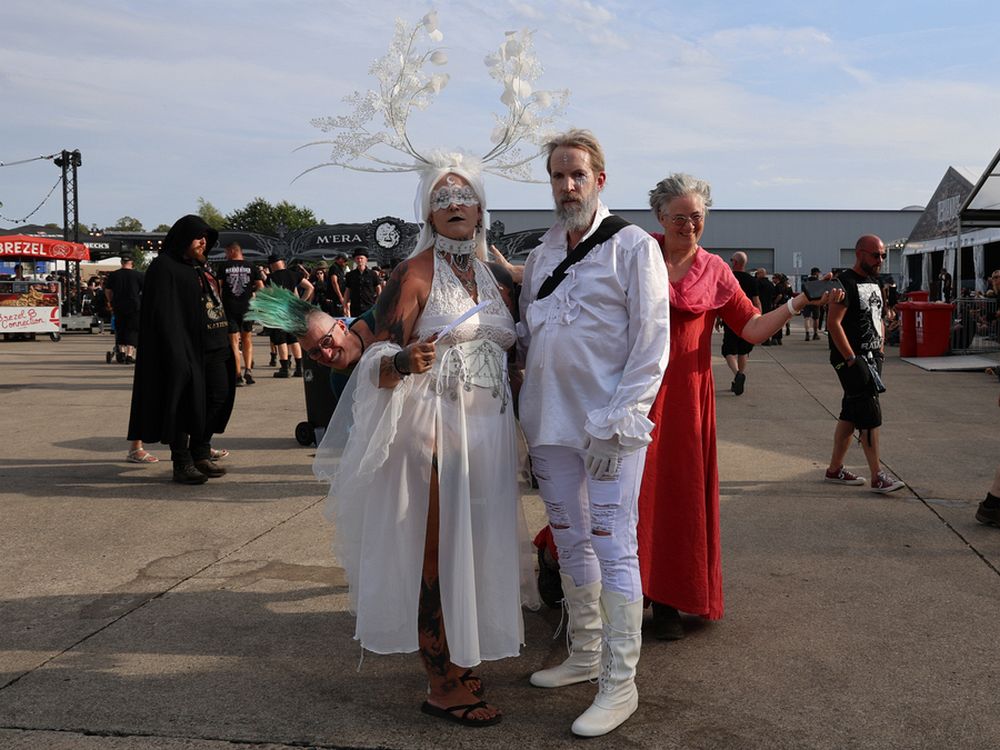
The goodbye is never quite final here. Even before the dust has settled, the next chapter is already beginning: the first ten acts for M’era Luna 2027 have already been announced, and tickets for next year’s festival are on sale. After a weekend like this, that feels less like marketing than a promise. The moon will rise over Hildesheim again - and, sooner or later, we will all find our way back beneath it.
All Pictures by Daniela Vorndran (http://www.vorndranphotography.com / http://www.facebook.com/blackcatnet) except Impressions by Iryna Kalenska and Lacrimosa by Daria Tessa