


 Interview with
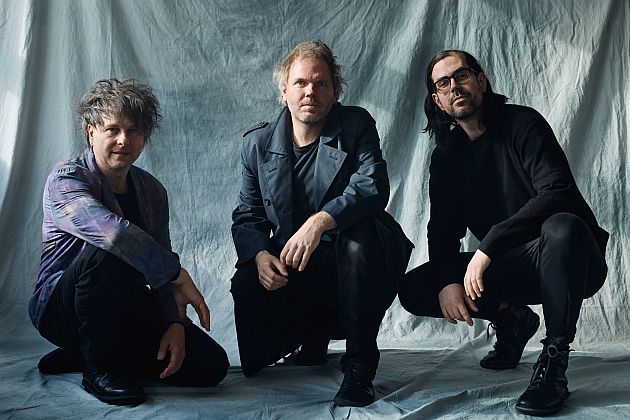
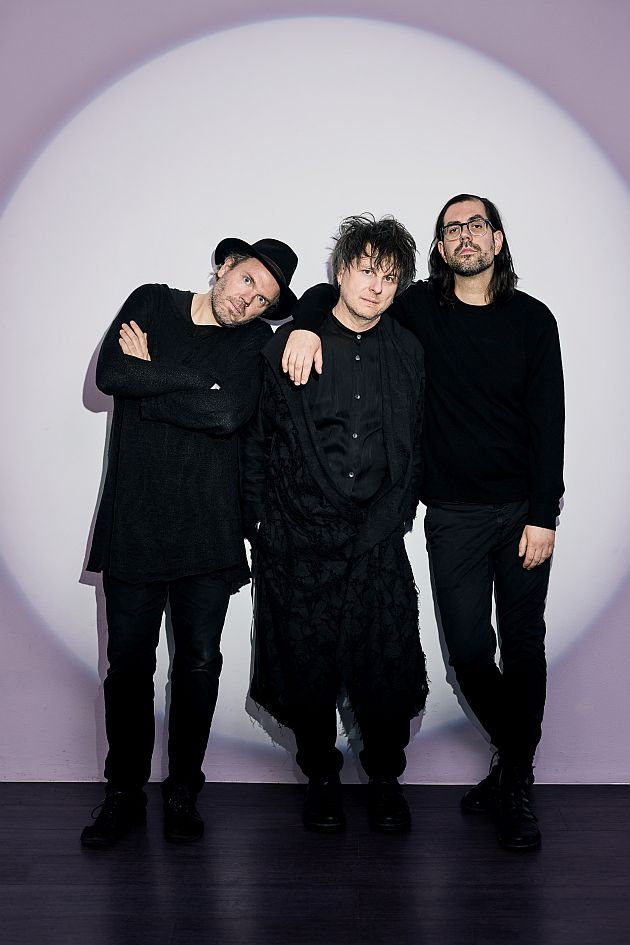
 Tobias Siebert (vocals) from KLEZ.E
Some records confront darkness by sinking deeper into it. Others search for a way through. On ‘Einmal mehr mit Dir gegen die Furcht’, KLEZ.E seem to do both. Fear, disillusionment and the sense of a world slipping out of balance are still there, but so are closeness, self-questioning and an almost stubborn belief in human connection.
Nearly 25 years into KLEZ.E’s story, Tobias Siebert sounds less interested in looking back than in asking what remains when certainty disappears. We spoke with him about writing more directly, the enduring THE CURE comparisons, growing older, Berlin, bringing the band’s atmosphere to the stage - and why, after all the changes, one thing has stayed untouched: longing.
Reflections of Darkness [RoD]: ‘Einmal mehr mit Dir gegen die Furcht’ feels like your most open and emotionally direct album to date. Was it a conscious decision to leave metaphors and ambiguities behind in favour of clarity?
Tobias:Our first albums were, in fact, very cryptic. I always found it exciting that my lyrics offered so much more scope than just distilling my own thoughts. I wanted to open up that space for everyone to incorporate their own thoughts. In a way, I still do that today. But the layers of the lyrics have become more complex, and with that, the need to phrase things more precisely. In a time when there no longer seem to be any clear answers, I at least want to say what I want to say.
RoD: The album is about fear, but it never succumbs to it. At what point did you realise that this album should convey hope rather than merely documenting the darkness?
Tobias:We’ve shed light on a great deal of darkness on the last two albums. That was necessary - a testament to our times. But I think right now, amid all this blackness, we need a few colours to inspire us, to help us navigate the mystery of being human. I’m quite deeply disappointed by the tendency towards antisocial behaviour in politics, in global contexts, and even simply in our own personal conduct. I see it in myself... The mountain-moving power of “being in love” is perhaps the only true energy for good.
RoD: The title suggests solidarity rather than isolation. Who is the “you” in ‘Once Again with You Against Fear’?
Tobias: The beloved other I just mentioned. A bond as close as can be. Someone you can trust completely. A beautiful sense of equality. Two faces so close that two eyes become one. Someone who would be there in a heartbeat to kick off a revolution.
RoD: Your previous albums often felt like observations of a world falling apart. This one seems to ask how we can continue to live in it. Has your perspective changed, or has the world simply become impossible to ignore?
Tobias: I think the world is already lost. Or rather, humanity is. The world probably doesn’t care at all if humanity ceases to exist. For the world, it would likely even be much better. As I said, I find it truly regrettable that we can’t manage to come up with at least a few clever ideas to save our future. That goes for every single one of us, deep down. It’s a shame that our affluence prevents us from giving up even a little bit. How are we going to live with this? I don’t know.
RoD: Songs like ‘Ich seh es an mir’ acknowledge personal contradictions instead of pointing fingers at others. Is self-criticism more effective than social criticism?
Tobias: Absolutely. Amid all the criticism, we shouldn’t miss the chance to take a good look at ourselves. Otherwise, we tend to let things slide for longer and longer. And we’re much better at changing ourselves than the rest of the world. We don’t need to wait for anything or anyone to do that.
RoD: Several songs reflect on missed opportunities, the passing of time, and letting go. Has getting older changed the way you write?
Tobias: When you’re halfway through life, you can’t help but look back at what you’ve already experienced - that is, the past - even as you look towards the future. Most of the time, my eyes were fixed on the future. Today, I really appreciate those experiences. And they keep encouraging me to seek out new ones. I juggle between serenity and panic. That has a huge impact on the lyrics. It fills me with joy that I can now write down the essence of who I am in this way. Letting go is definitely a good thing.
RoD: If there’s one song lyric on the album that best represents who KLEZ.E are today, which one would you choose?
Tobias: Probably ‘Hymnus’ and ‘Im Herbst’. They’ve become something of a preface and epilogue to the album. Maybe they don’t just frame the record, but embrace the band as well.
RoD: Critics continue to compare KLEZ.E to THE CURE. Does this comparison still feel flattering, or has it become something you constantly have to defend yourselves against?
Tobias: The comparison remains flattering. However, we’re staying on top of things and constantly trying to break new ground. Hopefully, we’ll surprise people more than some of the other bands we’re compared to.
RoD: You once joked that you wanted to make “your own CURE album”. Looking back now, do you think you’ve finally reached a point where listeners hear KLEZ.E first, before they notice your influences?
Tobias: Yes. People were already saying we had a certain degree of originality even in the early years. Hopefully, we’ve never completely abandoned that, despite all the changes. Perhaps with ‘Einmal mehr mit Dir gegen die Furcht’ we’ve built a bridge back to the time before ‘Desintegration’. We’ve heard from some friends: “This and that is so typical KLEZ.E...” Maybe there’s something to it?
RoD: This album feels lighter without losing its darkness. How did you achieve this balance in the studio?
Tobias: The demos for the songs were already very clear. All three of us now work on the songs individually. That’s very refreshing, and everyone puts a lot of effort into clearly establishing the moods right from the demo stage. So, the basic feeling was already there very early on, and we reacted to those cues in the studio.
The big difference compared to ‘Erregung’ was that this time we recorded over demo tracks that were already partially in place. So it was a matter of recording one part after another—or layering them. We recorded ‘Erregung’ live as a band, all together in one big room. But this layering of tracks gave us more creative freedom this time to highlight individual parts more effectively during the recording process.
Even so, the whole thing went very smoothly and pretty quickly. I think it’s precisely because the demos were already so expressive. The dark atmosphere just naturally flows from our hands as a kind of spice. It’s certainly also due to the many modulating effects and the often-cold string synthesizers that we like to use to blend the guitar and bass together. We also often play two basses instead of any guitars at all.
RoD: Tobias, as a producer, you’ve worked with many different artists. Does working with other musicians change your approach to KLEZ.E, or is this band still your most personal creative space?
Tobias: With KLEZ.E, the role of producer no longer exists. So, I can stay completely on the band’s side. Which, in turn, is always good for understanding how a band feels when it’s in the studio. So, I’m familiar with both sides’ ways of working and enjoy them very much. We as a band have been together for a long time; we know each other really well and also know exactly what we want and how everything should sound and fit together.
And yes... I do think that every studio session inspires me. Whether it’s through a band I’m working with or a new recording technique I’ve experimented with. Something always sticks with me, and I guess that’s how art works - by processing experiences within oneself and transforming them into new forms that are expressed outwardly.
RoD: Your music has an incredibly atmospheric quality on the albums. How do you translate that cinematic sound to a live performance without losing the intimacy?
Tobias: We do everything live exactly the same way we do in the studio. We use the same instruments and amps, so it naturally sounds like us. We’re probably a tiny bit rougher when we play live, but I think that just adds to the intimacy.
We don’t need heavy makeup. And the studio versions don’t really have any bells and whistles or, say, 100 extra tracks - they’re basically just the three of us mixed together. That’s why it works right away when we play live together. The atmosphere comes alive through our interplay, and the intimacy lies in the vocals and lyrics and the way we embed the melodies into what you call the cinematic sound.
RoD: Which song from the new album surprised you the most when you started rehearsing it live?
Tobias: ‘Melancholia’... we thought it would be complicated because, despite its lightness, the song is very complex. It worked right away. Really very surprising.
RoD: Do you see your concerts as an escape from reality - or as a place where it becomes impossible to escape reality?
Tobias: That sounds as if reality were a state that’s somewhat stagnant or, at any rate, has a certain everyday quality to it - something negative about it. I try to fill my everyday life with refreshing things as much as possible, and I’m pretty absorbed in my reality, even though it’s interspersed with an insane amount of work and is, of course, exhausting. So, luckily, I don’t really need to escape from it. Being on tour is like a long vacation with a completely different focus than being at home. I love both, but I also really, really enjoy being on tour. I could play every day. I like talking with the people who are close to us for a few hours. And I really enjoy playing the songs.
RoD: Berlin has changed enormously since KLEZ.E’s early days. Has the city evolved alongside the band, or have you gradually become estranged from the place that shaped you?
Tobias: Berlin has changed enormously time and again since its very beginnings. That’s Berlin. I moved here as a stranger, and I’m moving out as a stranger.
RoD: Your albums often convey a very distinct sense of place and memory. To what extent could KLEZ.E exist outside of Germany - or even outside of Berlin?
Tobias: Isn’t this less about specific places and more about a certain feeling that everyone probably knows? A memory of an episode tied to specific places. Aren’t Müllerstraße and the Champs-Élysées, Lombardobar and Penny Lane pretty much interchangeable?
RoD: Almost 25 years after KLEZ.E was founded, what has remained unchanged despite all the musical evolution?
Tobias: The longing.
RoD: If someone has never heard of KLEZ.E, which album should they start with - and why?
Tobias: It’s best to start with ‘Einmal mehr mit Dir gegen die Furcht’. New albums don’t stay new for long, but old ones are always old.
RoD: And finally: Once people have finished listening to ‘Einmal mehr mit Dir gegen die Furcht’, what feeling do you hope will stay with them long after the music ends?
Tobias: The feeling of being understood.
Pictures by Caroline Pitzke