

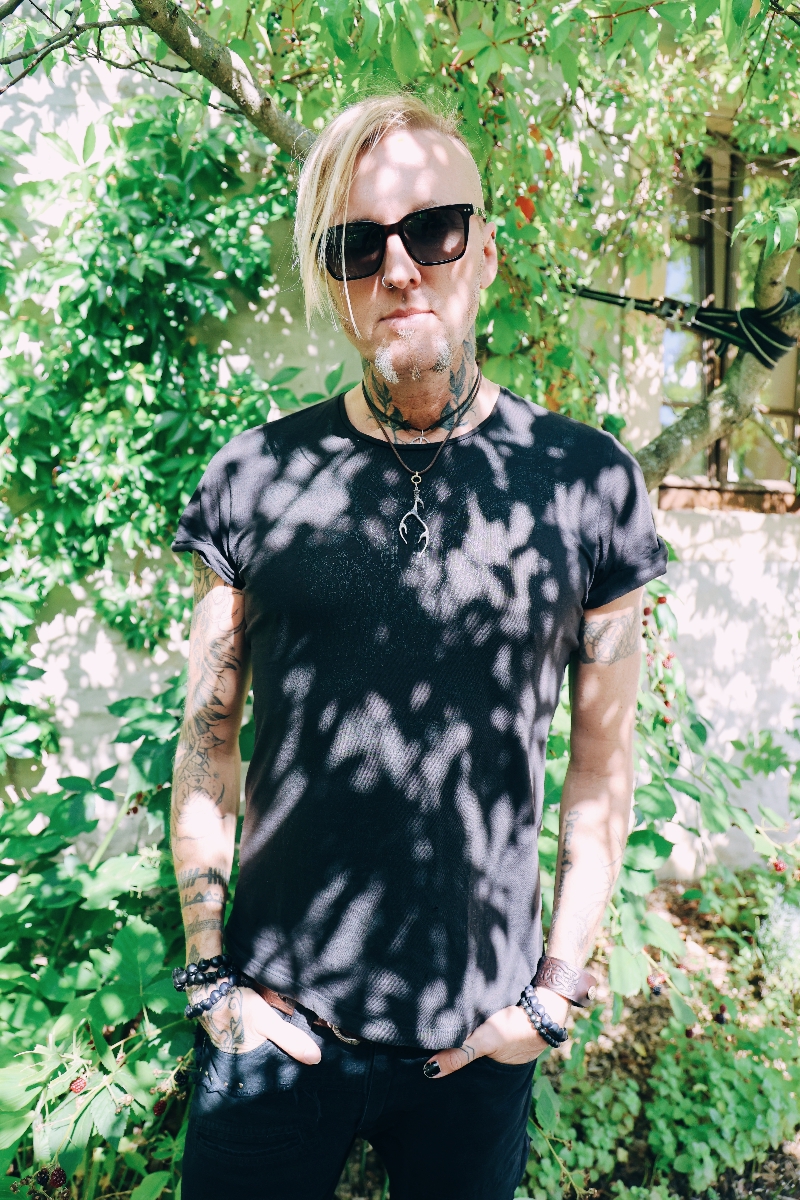
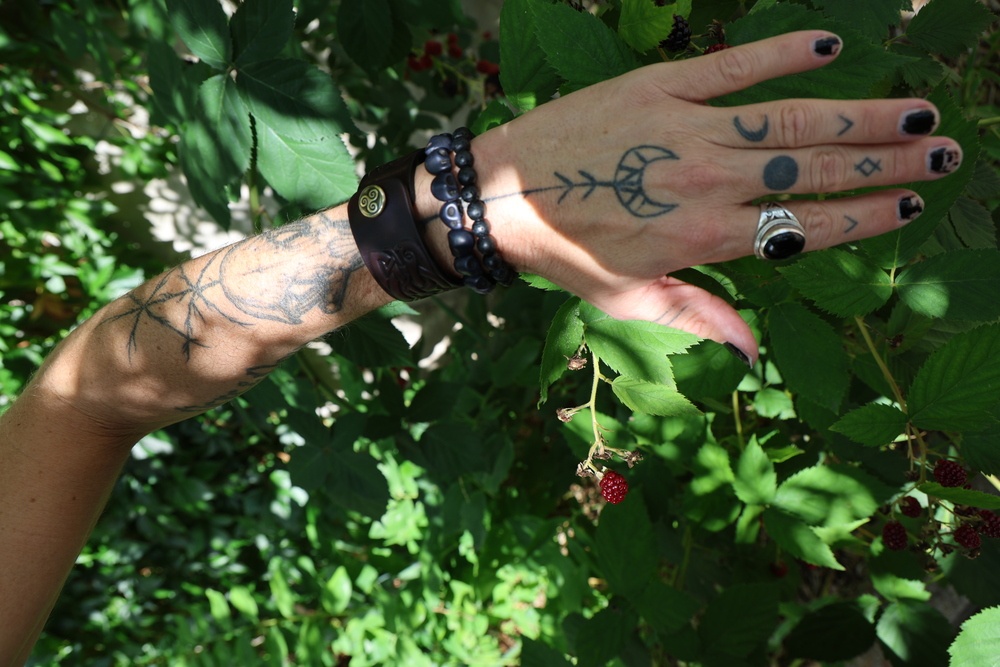
 During FAUN’s concert at the beautiful Rittergut Positz, I had the chance to meet Oliver and capture a few wonderful portraits of him somewhere between warm rays of sunlight and the leaves of the surrounding trees. The setting felt almost made for those images - natural, atmospheric and perfectly in tune with the world of FAUN.
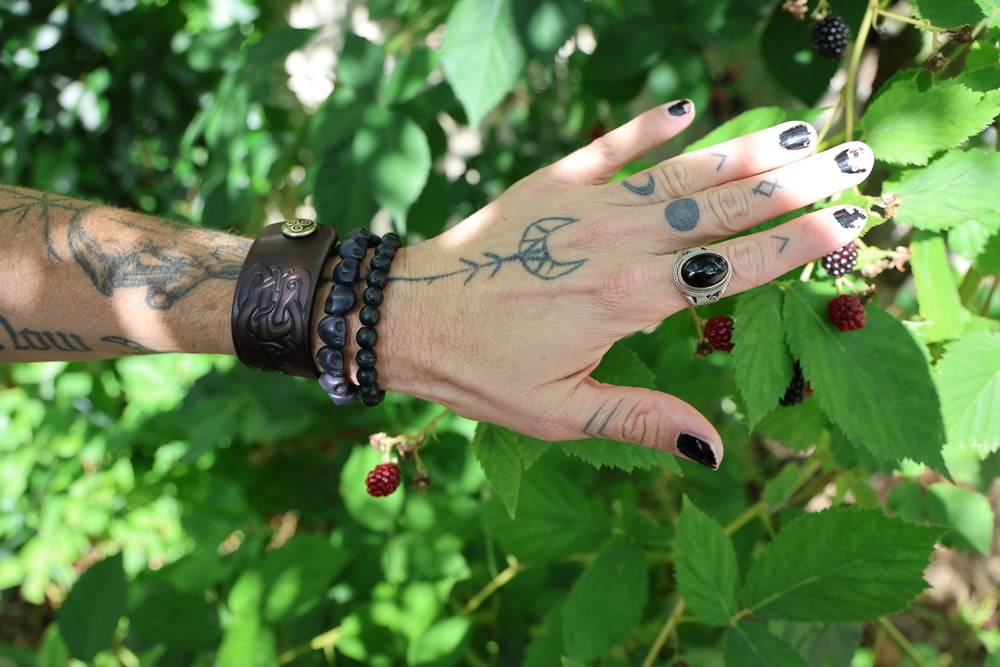
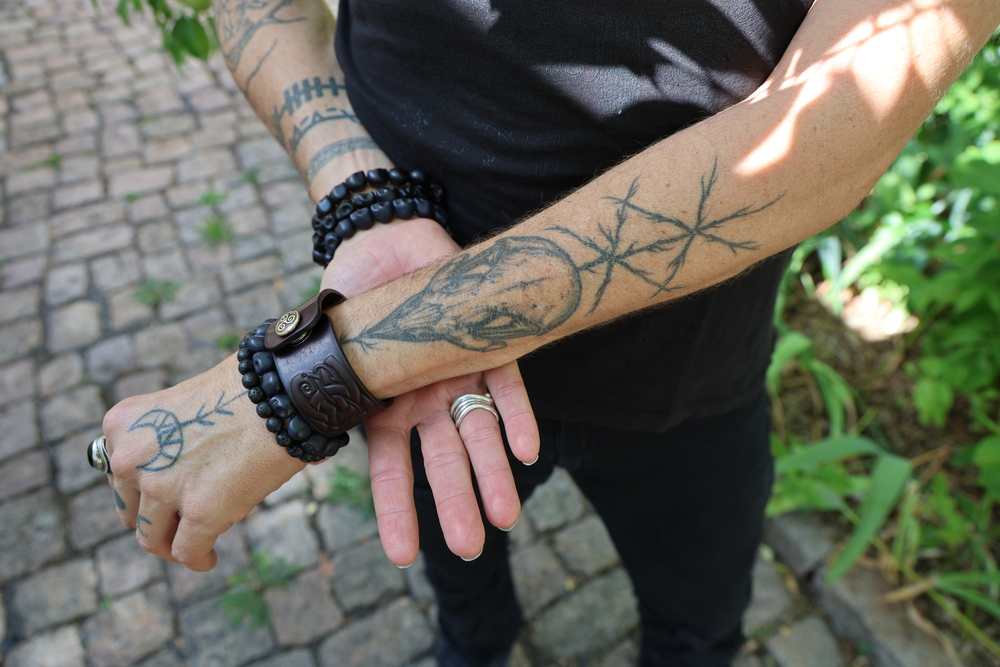
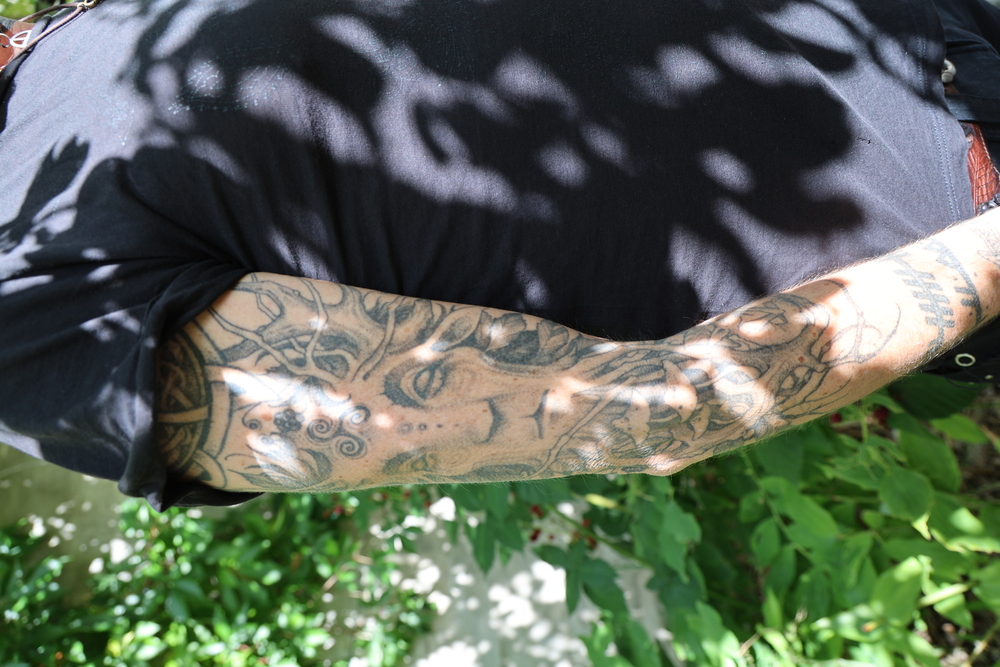
We also talked about his striking tattoos and the stories behind them. What starts with the visual side of the ink quickly opens into something much more personal: memories, symbols, different chapters of life, and the meanings we choose to carry with us - sometimes openly, sometimes only for ourselves.
Reflections of Darkness [RoD]: When did you get your first tattoo, and what design did you choose?
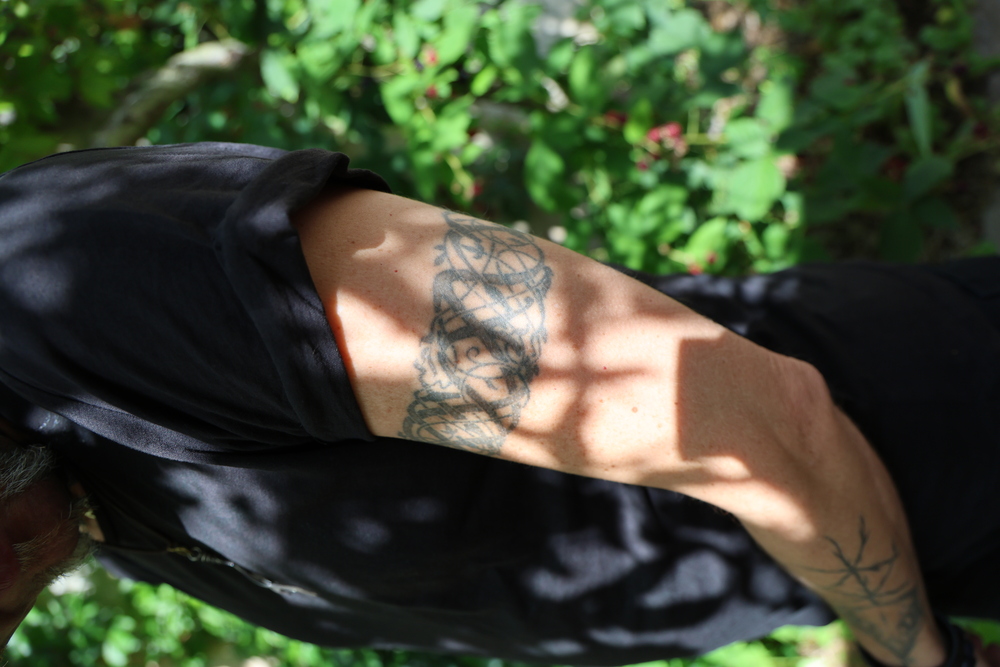
Oliver Satyr [Oli]: I got my first tattoo around fifteen years ago in the Netherlands. It is a Viking knotwork design based on intertwined animals from a stave church in Norway. I adapted the motif myself so that it formed a closed ring, and I spent a long time drawing and refining it before I finally had it tattooed.
RoD: How long did you think about it beforehand?
Oli: A very long time. I worked on the design for several months, drawing it again and again and changing it until the knotwork formed the closed ring I wanted. When it was finally finished, I was very proud of it.
RoD: How many tattoos do you have in total?
Oli: Honestly, I do not really know because I have quite a few small ones. I would say somewhere around ten to fifteen.
RoD: Are there any tattoos you would like to tell a story about - and what do they mean to you?
Oli: I think every one of my tattoos has an important meaning for me. I usually think about them very carefully beforehand. Many of them are like little reminders: I see a tattoo and it reminds me of something I have learned, something I still want to learn, or something I never want to forget. That is one of the most important things about tattoos for me - they can keep your attention on something that truly matters.
RoD: Are you planning to get more tattoos?
Oli: Definitely. I would like to have many more, but I also have to stop myself from rushing into it. I do not want to book an appointment before I have a proper idea for the motif, and good tattoo artists are often booked a year in advance. So yes, I absolutely want more, but I want to plan them properly.
RoD: Were all your tattoos done by the same artist?
Oli: No, I have been tattooed by many different artists. Sometimes I meet someone, see their style and really like it. Some of the artists are also people I know - for example, I have a good friend in Hamburg who is a tattoo artist, and I also know someone in the Czech Republic. So, I have moved between quite a few different artists, although the overall style of my tattoos is fairly consistent.
RoD: How did you choose your tattoo artists, and who created the designs?
Oli: I do not really search for tattoo artists in a systematic way. Sometimes I see someone’s work online and think, “That is a great style,” and then I remember the artist. For my first tattoo, I created and developed the design myself. With other tattoos, I usually have a clear idea of what I want and then choose an artist whose style fits that idea.
RoD: What was your longest tattoo session?
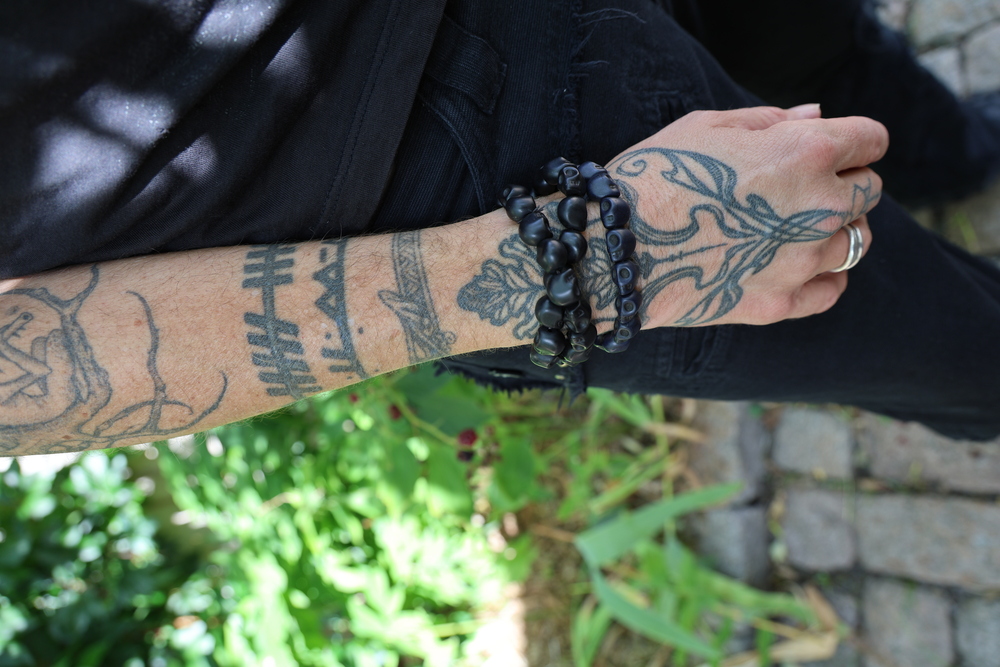
Oli: One long session on my arm lasted about five or six hours. The hand-poked tattoo on my hand took around seven hours, so that was probably the longest. It was a very long session and my hand was quite swollen afterwards, because that kind of session is simply exhausting for the body. But I am very happy with the result - it turned out beautifully.
RoD: Getting tattooed can be painful. How do you handle the pain - what helps you get through it?
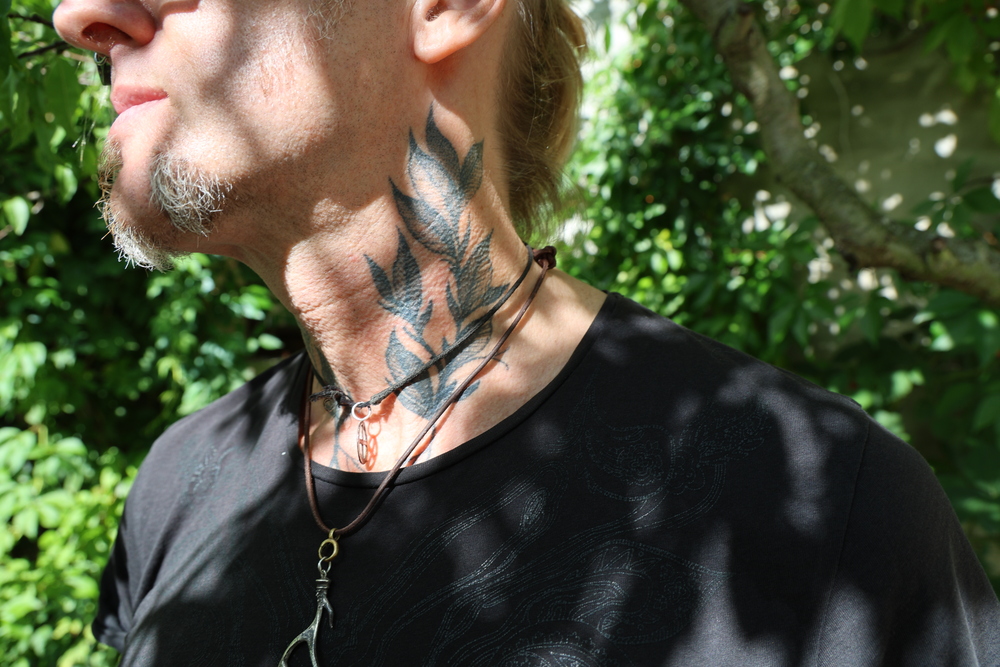
Oli: I find it very interesting because you learn something about yourself in the process. The most painful area for me was probably my neck; it was extremely sensitive. At first you think, “This hurts so much, I will never get through it,” but then the pain comes in waves and your awareness changes. By the end of the session, I was talking normally with the tattoo artist because I had somehow adapted to it. It taught me that pain has a lot to do with perception and expectation, and that you can influence part of the experience with your mind.
RoD: Have you ever regretted getting a tattoo?
Oli: There are a few where I have thought, “That was not planned well enough; I would do it differently now.” I have never had anything covered up, but sometimes I was simply too quick and later felt that I should have spent more time planning it.
RoD: Are there types of tattoos that are off-limits for you - ones you would never get or never tattoo on someone else?
Oli: There are certain political symbols I would be very careful with. I also think you have to be cautious about taking something from another culture if you do not really understand its meaning. If you use a cultural symbol, you should genuinely understand what it represents. Beyond that, a lot is simply personal taste: I do not like very colourful tattoos or photorealism. Tattoos on the face are not a taboo for me if they suit the person. I am a musician, so my appearance does not restrict my profession. Personally, I mostly stick to blackwork and motifs with a medieval, Celtic or Viking feeling because that fits my music and my art.
RoD: People say getting tattooed is addictive - once you start, you cannot stop. Do you agree?
Oli: Not necessarily. I have taken long breaks, and I also think it is important not to overdo it. Of course, once you have one tattoo and it looks good, you start thinking about where another one might fit. But I would not really call that an addiction. I am also a perfectionist, so sometimes I look at the overall composition and think it could be even better - and then I start planning the next one.
RoD: Right now, tattoos are very trendy. Many people do not really think about the fact that a tattoo stays with them for life - they just want to look cool and follow the crowd. Some go to a tattoo studio and say, “Show me what you have.” Then the artist ends up not really creating art, but mass-producing. What do you think about that?
Oli: I think tattoo artists do have a certain responsibility, and sometimes they should stop people from doing things that are clearly not well thought through. At the same time, I also see something positive in the popularity of tattoos. It gives many creative people the opportunity to work artistically and actually make a living from their art. I think that is a beautiful side of the trend.
RoD: In the past, tattoos were often considered antisocial, and people with them had trouble getting jobs. Has this perception changed today, or do prejudices still exist?
Oli: Here in Europe, I think it has changed enormously. In some countries, such as Japan, it can still be more complicated, but in Europe the old image has largely disappeared. Tattoos used to be associated with criminals and outsiders, whereas today they are much more widely seen as a form of creative expression. I think it is a positive development that people are no longer automatically judged or excluded because of them.
RoD: Last but not least... what advice would you give our readers who are planning their first tattoo? What should they consider when choosing a studio, artist, or style?
Oli: Choose a motif that is genuinely important to you, and then let the idea sit for a while. Wait a month or two and see whether you still like it. After that, take your time finding the right artist and studio. You can even draw the design on your skin or try a temporary transfer first, just to see how it feels and whether you really want to live with it. I think taking that time makes a lot of sense.
Project by Daria Tessa and Daniela Vorndran, Interview by Iryna Kalenska & Daria Tessa
Pictures by Iryna Kalenska, Photo Editing by @etlerto_photography