

 Interview with
Boris Benko from Silence
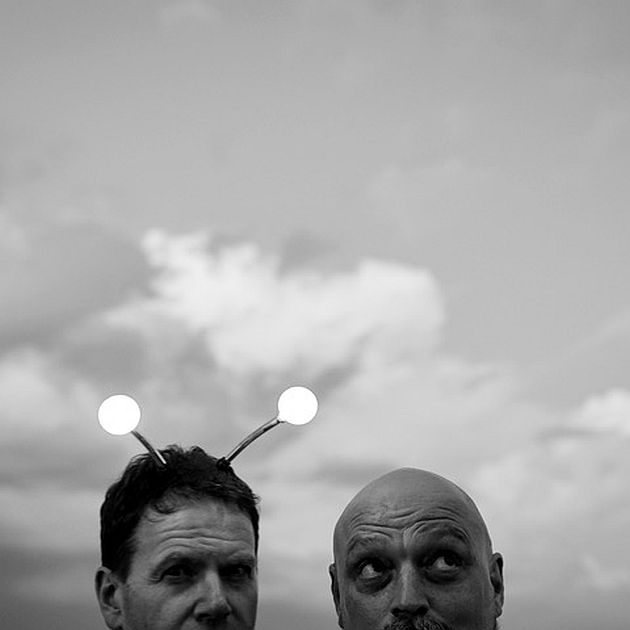
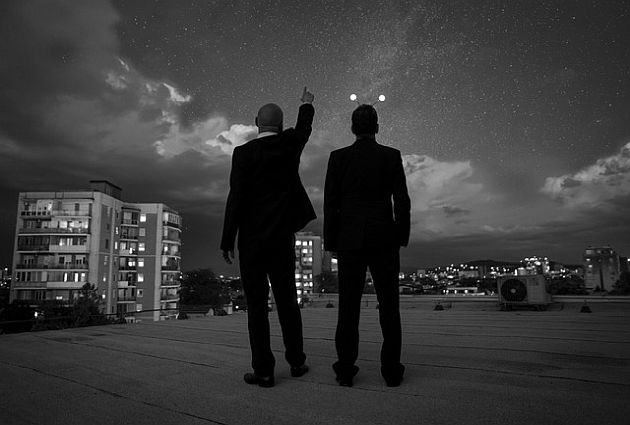
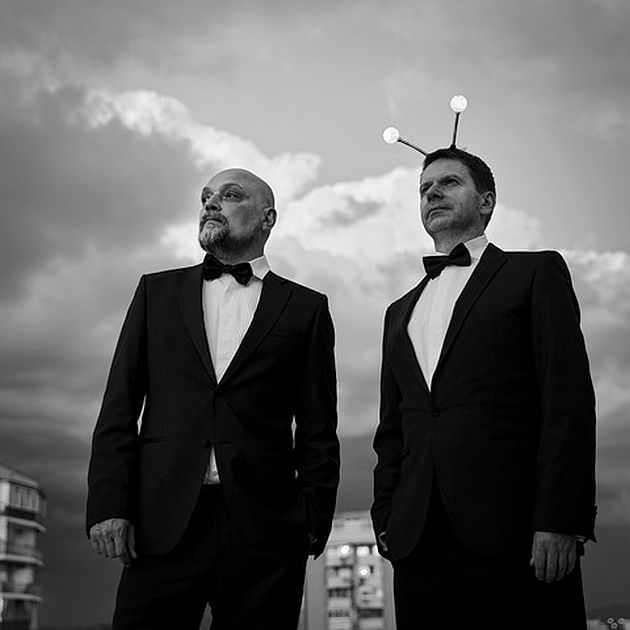
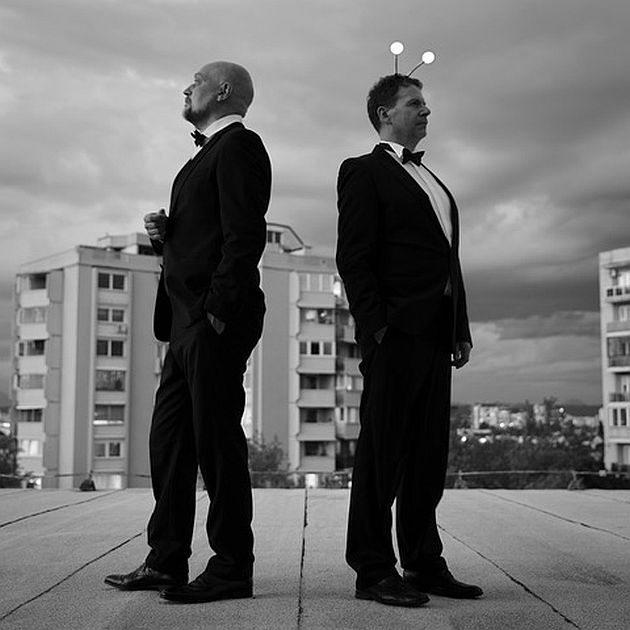
What if one day you realised that you had become a stranger on your own planet? That there was no need to travel to distant galaxies to feel like an alien - simply living on Earth long enough, watching the world gradually transform into something increasingly unfamiliar, would be enough? This unsettling paradox lies at the heart of ‘Alien Poetry’, the new album by Slovenian duo SILENCE.
Yet behind the image of the alien lies no science fiction, but a deeply human story of people struggling to find their place in a world shaped by technological progress, social divisions and a disturbing erosion of empathy. And somehow, even in this increasingly dystopian landscape, there is still room for beauty, irony and hope - although perhaps not always in the forms we might expect.
In our conversation, Boris Benko reflects on why Earth seems to be producing more and more outsiders, and how artificial intelligence is challenging not only the future of art but also our understanding of what it means to be human. He reveals how an ambitious dance production and an unexpected collaboration with a symphony orchestra helped bring ‘Alien Poetry’ to life, why humour remains essential when confronting the darkest aspects of our reality, and how working with LAIBACH permanently changed his perception of music.
We also discuss the real-life tragedies behind some of the album’s songs, the importance of preserving a little mystery in an age of relentless self-exposure, and the peculiar experience of releasing a sixth album that somehow feels like a debut. Along the way, there are reflections on music and literature as lost-and-found departments for wandering souls, the challenges of being two "stumbling dinosaurs" in the age of algorithms, and the fragile hope that even a world full of aliens might still have something worth holding on to.
RoD: In the statement accompanying ‘Alien Poetry’, you describe becoming aliens not by travelling to another planet, but by staying on Earth for too long. When did this feeling first become the starting point for an album, and how personal is it for each of you?
Boris: I think alienation - the feeling of not quite belonging on this planet - is pretty common, widespread. It’s hard to feel at home in today’s world. We’re replacing millions of people with AI. We’ve handed over practically all our activities - even art - to machines. We’re spending absurd amounts of money on wars and weapons of mass destruction while demolishing education and healthcare. We’re laying waste to the planet and consciously causing climate change. We’re producing outsiders, aliens, on an industrial scale: displaced persons, outcasts, the underprivileged, the disillusioned, the angry, the depressed, the anxious, the lost. Aliens are, in a manner of speaking, the fastest-growing nation on Earth.
RoD: These songs were used for MN Dance Company’s ‘Borderless Body’. How did writing for movement and a theatrical setting shape the compositions, and at what point did you realise the material could tell its own story as a SILENCE album?
Boris: When we started working on ‘Borderless Body’ with MN Dance Company, most of the songs from the album had already been written. Thematically, the songs suited the concept of the performance, so we decided to use them. ‘Borderless Body’ was a big production, one of the key projects of the European Capital of Culture GO! 2025 Nova Gorica–Gorizia. It featured a massive stage design, fifteen dancers and even a dancing robotic dog. We wanted the music to match the scale of the performance. So we asked the producers if there was any chance of recording the music with an orchestra. They contacted the RTV Slovenia Symphony Orchestra, which was, to our immense delight, available and interested. Once the orchestra was on board, we knew the recordings would be worth releasing. We were, to quote one of our new songs, lucky fools. Things just fell into place.
RoD: You recorded with the RTV Slovenia Symphony Orchestra, yet the album retains a remarkable sense of intimacy. What was the creative process like between the two of you and the orchestra? Were there moments when the orchestral arrangements took a song somewhere you had not expected?
Boris: The creative process was very efficient. We had a tight deadline and had to work fast. We had a pretty good idea of how the songs would sound. Music-arranging software is quite good at simulating an orchestra. Still, the final result is always a bit surprising. I remember thinking that the recordings sounded lighter, more hopeful than expected. It’s not often that I’m surprised by how optimistic our music is.
RoD: The music feels richly melodic and almost cinematic, while Boris’s soft, enveloping voice brings the listener very close to the words. How consciously do you balance orchestral drama with restraint, vulnerability and the spaces between the notes?
Boris: We try not to overthink it. We rely on intuition: if it evokes an emotional response, it works. If it doesn’t, we try again.
RoD: ‘Tonight We Are All Your Children’ has the weight of an opening statement, while ‘Lullaby’ suggests tenderness and the need for protection. Who is being addressed in these songs, and what connects their different forms of longing?
Boris: ‘Tonight We Are All Your Children’ was a reaction to the genocide in Gaza. As for ‘Lullaby’, it was inspired by the story of Alan Kurdi, the two-year-old Kurdish boy who drowned in 2015 when an overcrowded inflatable boat capsized while trying to reach the Greek island of Kos. Unfortunately, Alan’s story is just one of many similar ones. I think it’s important to talk about these deaths. A lot of people - including international leaders - tend to ignore and downplay them.
RoD: ‘Light (A Kind of Braille)’ is such a striking image: something normally seen becomes something we have to learn to feel. What inspired that title, and does the song reflect a search for another way of understanding the world?
Boris: That’s a beautiful interpretation. I don’t want to ruin it by revealing the original idea behind the lyrics. It’s far more banal.
RoD: ‘Two Fools’ and ‘A Little Something Besides Everything’ both seem to leave room for humour, vulnerability and small human gestures. How important is that gentler, perhaps slightly absurd side of life when you are writing about alienation?
Boris: Humour always comes in handy - particularly in a gloomy, dystopian world. As Oscar Wilde noted: “Some things are too important to be taken seriously.” Speaking of ‘Two Fools’: it almost became the album title. Had we used it, it would have been the first album title that was also a biography.
RoD: ‘Slave to the Algorithm’ and ‘Artistic Swimming for Boiling Frogs’ sound particularly connected to the present day. What troubles you most about the ways technology, constant information and social expectations shape our behaviour? And do you see any reasons for optimism?
Boris: I feel I must apologise in advance: I’m a lousy optimist. Optimism is Primož’s forte. The problem with the digital world is that it is controlled by immensely powerful people who regard empathy as “the fundamental weakness of Western civilisation”; people who openly say things like, “If you’re evil, you’re at least competent.” Ironically enough, these people sound like soulless robots plotting the destruction of humanity.
RoD: In ‘The Coldest Fire’, ‘The Night Watch’ and ‘I Am Written’, the titles suggest contradictions, vigilance and questions of identity. Without giving away every meaning, is there a line or an image from these songs that comes especially close to what you wanted to express on this record?
Boris: “My words, they shape me.” We’ve grown dangerously accustomed to people using brutal, vicious language.
RoD: The album speaks of homesickness for a home one has never known. What does ‘home’ mean to you now: a physical place, the people around you, a memory, or perhaps the freedom to be yourself? How do you keep from losing that sense of self in an increasingly demanding world?
Boris: Like many people, I feel quite lost. Occasionally, I find myself in other people’s music and writing. Music and literature are the lost-and-found departments for lost souls.
RoD: You have moved between alternative music, theatre and film for decades, and your work with LAIBACH - from ‘Volk’ to the 2015 performances in North Korea - is a particularly unusual chapter. Looking back, which experiences changed your way of thinking about music most profoundly, and what still feels new or challenging today?
Boris: LAIBACH definitely rewired our brains and changed our understanding of music. They’re absolutely unique. It’s impossible to listen to them - let alone work with them - and stay the same. They’ve been stretching the definition of the term “music group” for forty years now. As for the second part of your question: releasing an album in 2026 feels disturbingly new and challenging. In just a couple of years, a lot has changed: methods of promotion, the media, society… Our sixth album feels very much like our first. We’d like to thank Accession Records and the Pekinpah Association for helping two stumbling dinosaurs.
RoD: After so many years of making music together, where do you find fresh inspiration? Are there contemporary musicians, composers, films, books or projects outside your usual musical world that have caught your attention recently?
Boris: There are quite a few contemporary artists we really like: Jordan Peele, Sam Fender, Zaho de Sagazan, Lola Young… However, we love spending our time exploring older music and films. Often, they’re more modern and relevant than contemporary works.
RoD: Social media can bring artists and listeners closer together, but it can also turn creativity into an endless demand for visibility. What kind of relationship do you want with your audience today, and how do you decide what to share - or keep private?
Boris: In my opinion, we should all keep some things to ourselves, preserve some ambiguity and inscrutability. Telling everyone everything there is to know about yourself is not the best way to attract public attention. Actually, it’s probably the best way to chase people away.
RoD: Your music has a strong theatrical and orchestral dimension. How would you like to bring ‘Alien Poetry’ to the stage? Are live performances with an orchestra, dancers or other visual elements something you are considering, and what would you want the audience to feel when they leave?
Boris: On 13 October, the day of the album’s release, we performed ‘Borderless Body’ at Cankarjev Dom in Ljubljana. We were joined on stage by the RTV Slovenia Orchestra. Currently, we’re performing the new repertoire in smaller venues. We’ve rearranged the songs for piano and voice. The concerts are a theatrical experience, a dialogue between music and various audio recordings featuring the sounds of our world: statements by prominent figures, events, film references and so on. It’s a kind of reverse Voyager Golden Record: instead of launching a time capsule into space, we’re launching it to Earth… so that people can discover a hopeful message about this planet.
RoD: Finally, after ‘Alien Poetry’, what comes next for SILENCE - more concerts, film or theatre work, or ideas for another record? And if listeners could carry one thought from this album into their everyday lives, what would you hope it would be?
Boris: We have a few concerts coming up. Hopefully, we’ll be able to continue working in theatre and film despite our new competitor, Mr Suno. I hope listeners will find something familiar and reassuring in our album, just as we do in other people’s work. If we succeed in that, we’ll be happy little aliens.