

 Interview with
Torben Wendt (vocals, music) from Diorama
Before the release of their eleventh studio album ‘The Substitute For Light’, we conducted an in-depth interview with DIORAMA mastermind Torben Wendt. You can find the first part of our conversation here. And now, enjoy the second part of our interview.
Reflections of Darkness [RoD]: How do you perceive the current ticket pre-sale situation - both for yourselves personally and within the scene in general? Back in 2022, you hinted that things could become more difficult for the mid-level and underground sectors. In your opinion, has the post-pandemic situation eased since then, or has your assessment from back then been confirmed?
Torben: Personally, we have no reason to complain. We actually haven’t toured all that extensively since the Corona blackout, and fortunately the current concerts in the run-up to the release of ‘A Substitute For Light’ have been very well received (by our standards). The fact that it takes a considerable effort to get through with tour announcements and promotion is simply something one has to accept. On the other hand, we are of course also seeing festivals being cancelled where artists from our circle - or we ourselves - would have been involved, and events struggling with poor numbers, from which nobody is immune.
My impression is that the competition is extremely intense, which is reflected, among other things, in the fact that clubs are sometimes fully booked 1.5 to 2 years in advance. On top of that, the overall economic conditions have hardly improved due to new crises. People understandably think very carefully about what they spend their money on, and for us personally things are not getting any easier either, as production costs are rising, especially travel expenses with regard to concerts abroad. So, it’s all a bit contradictory: in some areas, things are working well, but the overall situation remains difficult.
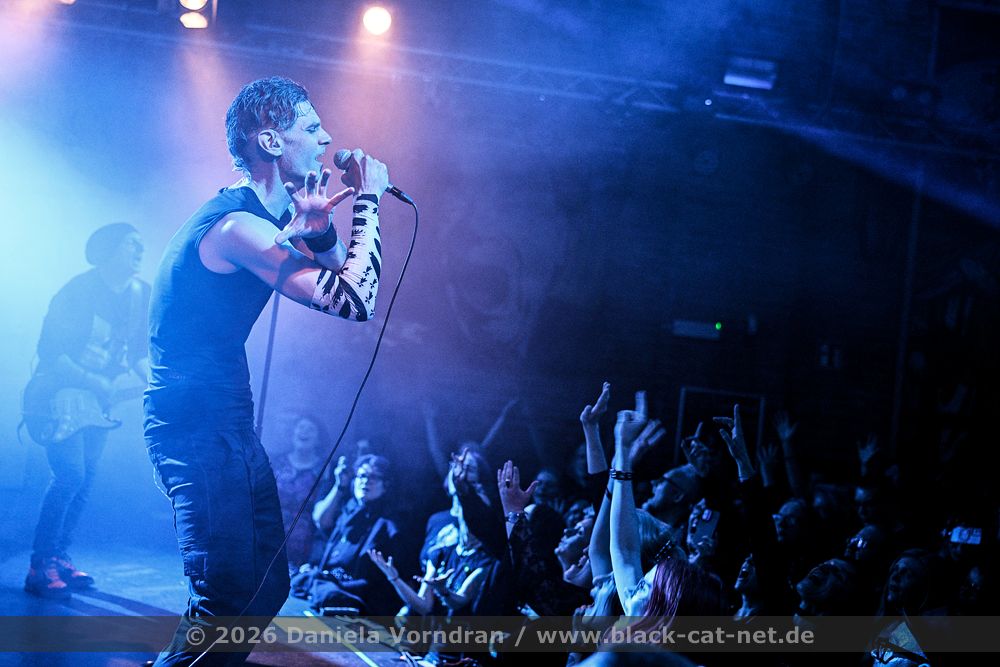
RoD: On the release weekend, you performed on stage in Oberhausen and Hamburg. Several festival appearances have already been announced for the summer. Are there any further club shows planned for the autumn, and which live highlights of 2026 are you personally looking forward to the most?
Torben: First of all, I’m looking forward to finally performing again at the Wave-Gotik-Treffen during Whitsun in Leipzig. We were already booked for this traditional festival very early on in our career and have since had the chance to experience its special atmosphere several times. In the summer, we’ll be playing at M’era Luna Festival. That will be outstanding as well, and as things stand at the moment, the autumn period is going to be quieter.
RoD: DIORAMA have stood for electronic intensity with organic depth for many years - ranging from piano ballads to Electro-Pop. How do you manage nowadays to bring this broad spectrum to the stage in such a cohesive and powerful way live?
Torben: By keeping things simple and not artificially homogenising our programme. This breadth and contradiction, this constant shift between different emotions and moods, is something like the core of our identity. We have to - and want to - confront that live as well with a varied set. And yet there is a common thread holding everything together, a magic that is always present, something you can always surrender yourself to. We perceive this magic ourselves and make every effort to ensure that it is conveyed to the audience in all its colours.
RoD: DIORAMA was founded by you in 1996 - at the time still as a one-man project - so the new album is being released just in time for the 30th anniversary. So far, you have never made a big celebration out of anniversaries. Will there be any special activities this time?
Torben: I think I always say this on such occasions: round numbers and the like mean absolutely nothing to me. I feel no inclination whatsoever to celebrate myself as an artist because of them - quite apart from the fact that celebrating in general is hardly my cup of tea.
RoD: When you look back on three decades: is the “acoustic display case” of inner processes still your driving force? Which musical upheavals and developments have been particularly formative for you?
Torben: That has remained unchanged, and fortunately over the years there has always been a sufficient supply of reflections and projections - and drugs… no, that was just a joke - with which the display case could be filled. There has always been this persistent need to express something internal, to translate it into sound, to describe and experience it on an alternative level. There was never any desire to execute a particular sound as skilfully as possible or to construct and then embody some marketable image.
In stylistic terms, pretty much every new album marked a step in development, sometimes more obvious, sometimes more subtle, and occasionally forwards and backwards at the same time. One formative moment, for example, was the addition of electronic arrangements on the second album ‘Her Liquid Arms’ following the ultra-romantic and fragile moments of the debut ‘Pale’. Or the sudden emergence of the avant-garde meta-level vibes on ‘Tiny Missing Fragments’, which are somewhat reminiscent of the ‘Amaroid’ era.
RoD: How do you balance your own artistic standards with the expectations of the audience?
Torben: Not at all. Zero. I did not become musically active in order to fulfil other people’s expectations, and I never made that the premise later on either. There is that famous piece of advice from David Bowie: never play to the gallery. That is exactly how I see it.
RoD: You once spoke of a “melancholic lightness” running like a common thread through your work. Is that a conscious artistic stance or something that simply emerges naturally from within you?
Torben: It reflects my personal identity - melancholic through and through, yet somehow easy-going as well.
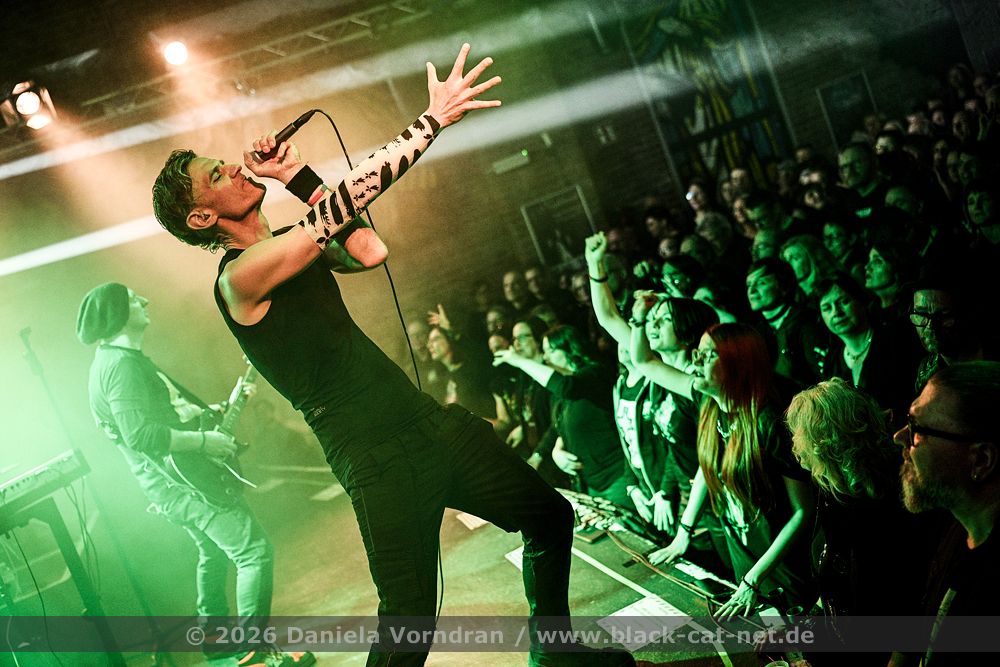
RoD: You had several years of classical piano training, while at the same time going through a punk phase (at least that’s something we had in common) as well as having an affinity for trance and techno. How has this broad spectrum shaped your style?
Torben: I was never really hardcore committed to any one musical path in my younger years. But I tried out a lot of things and picked elements from various styles that I liked and vibed with. At the same time, a lot of it is also down to coincidence and encounters. For example, when I started the band DRINKING BIER in the early nineties with my brother and a few of his mates, Punk Rock - and beer - was what everyone could agree on, with me being a huge fan of BAD RELIGION at the time, and you simply drifted into it.
It was also a period when friends would spend entire afternoons and nights showing each other music, and I was always enthusiastic and open-minded towards new things. Given this broad, ever-shifting and undefined horizon, combined with a certain inner conflict, it is probably only fitting that DIORAMA feels at home not in any clear-cut pigeonhole, but somewhere between the rows of chairs.
RoD: You first came into contact with DIARY OF DREAMS in the early nineties. Adrian became the producer of your first album, and your albums have been released on his label Accession Records ever since. How did that initial contact come about?
Torben: In the most classic way possible - with letter and seal. I wrote Adrian a letter - analogue, written in biro. And he called back.
RoD: You have shared a long-standing friendship with Adrian. The two of you even launched a joint project, COMA ALLIANCE. How important is this connection to you - both artistically and personally?
Torben: Our connection as friends and colleagues has been a constant spanning decades, an inseparable, significant and entirely natural part of our life story - and therefore anchored in a place where one does not really stop to ask oneself how important it is.
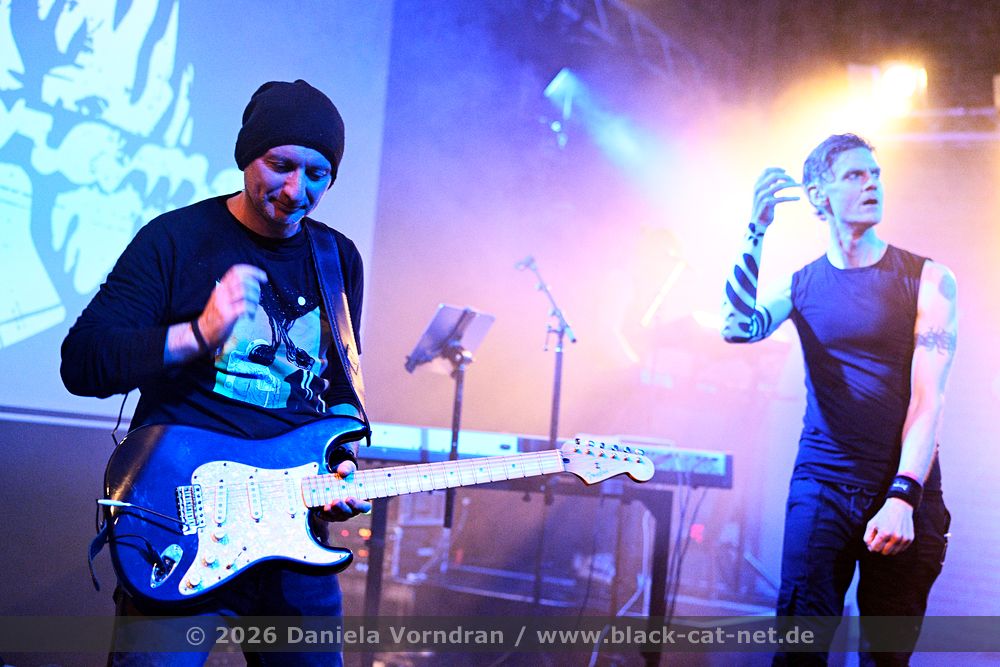
RoD: You were yourself part of DIARY OF DREAMS for a period of time. In 2000, you toured together, initially with you exclusively on piano. How strongly did this phase shape your stage identity?
Torben: Thanks to everyone who had to endure that back then. Those were simply the first steps - or rather, I was mostly sitting down. The honesty and naivety of those very early solo performances on piano stand entirely on their own. I never regretted approaching it that way. Later on, however, it became clear that we had to reinvent DIORAMA first as a duo and then as a live band in order to do justice to the further development of our music.
RoD: You already hinted at it: with Felix Marc, a second creative pole joined in 2001. Today, you are a four-piece band. How has DIORAMA changed as a result? What part do Felix, Zura and Marquess play in the creation of an album?
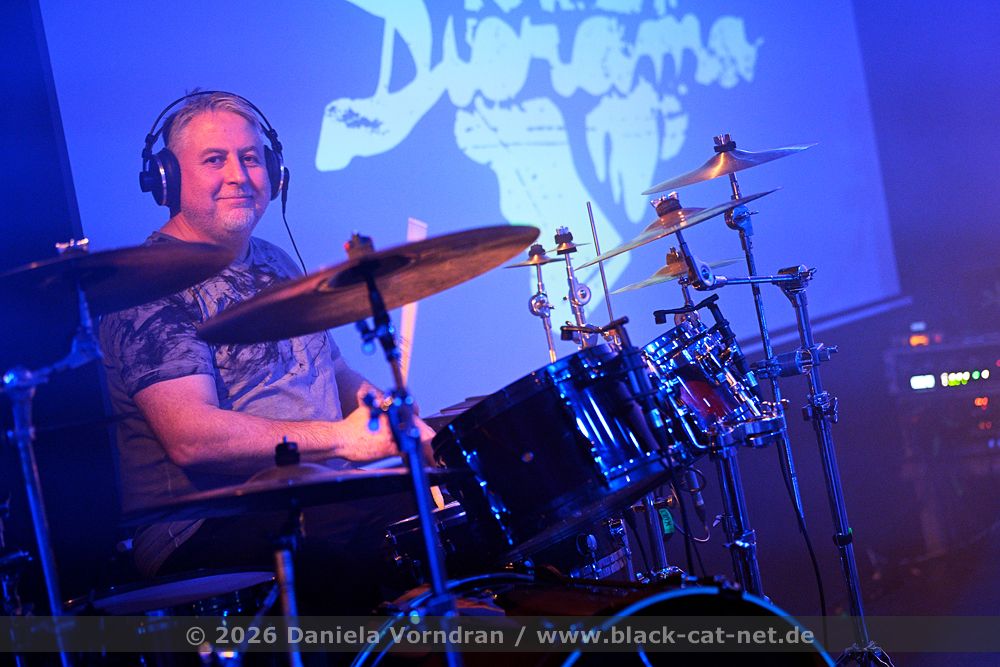
Torben: When I first started out, I positioned all the musical dominoes on my own; today, a lot emerges through the band’s direct exchange. What makes it exciting is that the songs can develop in unexpected directions as a result, and yet in the end everything still flows together naturally. Felix has been closely involved in the production process ever since ‘Her Liquid Arms’, and especially on the last two albums the collaboration was particularly intense. With his guitar and effect ideas, Zura often adds a striking additional flavour that enriches and expands the songs. And Marquess, through his drumming, shapes above all the band’s live energy enormously. Every change compared to the solo beginnings has been based on the openness to allow exactly that.
RoD: With regard to COMA ALLIANCE, you expressed optimism in the past. From today’s perspective, how realistic is a continuation? I know that many fans would be tremendously happy about another album from this project and would love to see you together on stage again (myself included).
Torben: The willingness is great, the spirit is alive, the schedules are tight. We have never lost sight of the project, but to be honest we have not really been able to pursue it any further recently in view of the current developments and to-dos of our main bands. So, it is good that you are reminding me of it.
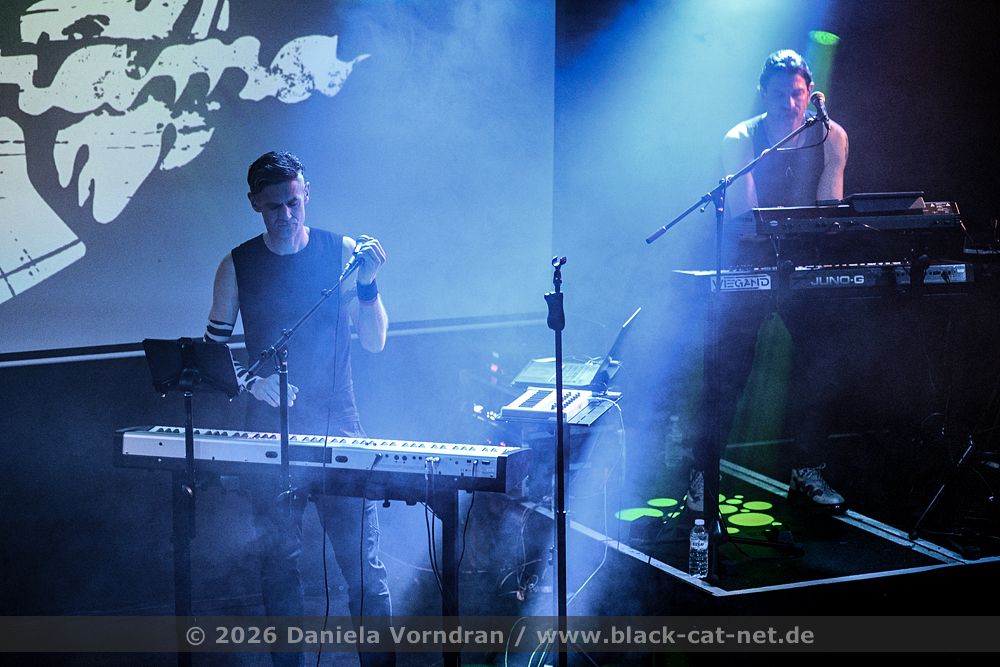
RoD: You once said something along the lines of: if nothing else helps, music does. Is music still the “bottom line” for you - the medium through which everything becomes better? Is that still your central motivation for being a musician today?
Torben: I already described my motivation for being an artist, making music, and having an outward impact further above. Of course, connected to that is the fact that music makes things more bearable and helps to process them, that it creates a valve through which pressure can be released that otherwise neither wants nor is able to subside. But here I am talking about music in its pure form - the sound and the magic. Unfortunately, this experience sometimes falls far too much into the background because of all the surrounding fuss, especially online, which I regret. In other words: absorbing music, feeling it, allowing yourself to be completely taken over by it, without distraction - that is the bottom line.
RoD: In an interview, I read that you described yourself as “half a nihilist” - neither an optimist nor a pessimist. Is this attitude reflected in your lyrics - in the refusal of clear moral orders?
Torben: Most of the time, I try to approach things as a realist. But in the lyrics, of course, I can slip into all sorts of roles and states - from hopeful and combative to resigned and destroyed. And utterly not giving a shit anyway. Those are usually more interesting perspectives than my unspiritual daytime attitude towards the moral orders of the world.
RoD: Your lyrics rarely tell linear stories. Instead, you describe impressions, states and reflections - open to association. Is that a conscious invitation or a necessity?
Torben: That is definitely correct. On a lyrical level, DIORAMA works in this indirect, incoherent, surreal way. I probably cannot do it any differently. The mental landscapes we drift through are, after all, partly objectively nonsensical or absurd in other ways. Psychological nonsense, really. Yet one’s own imagination can in turn assemble an overall picture from those fragments of content, or find a message that resonates with the soul - and then, in the end, the whole thing somehow still becomes coherent.
RoD: Besides English, you also speak Spanish and French (just like Felix). Most of your lyrics are in English. Was the language a conscious decision or did it simply develop that way somehow? When do you know that a text requires a different language, for example German?
Torben: It is not a conscious decision - meaning we do not sit down and say, “today let’s do German” or “today let’s do Swedish”. Either the line or lines are already there beforehand, in which case it was simply an inspiration - or it emerges during the songwriting process because it develops organically from the atmosphere of the piece. In general, I also think it is a question of influences and listening habits. Not all, but most of the things we used to listen to - especially the all-time favourites - were, after all, likewise in the English language.
RoD: As a young person, you spent extended periods abroad - in Canada, Spain and France. Did those experiences shape you more personally than musically?
Torben: Fuck - “young person” indeed. All of that was far too long ago. Yes, especially the longer periods I spent in Toronto and Valencia are absolute mega highlights in my life story, and the memories of them still carry through to this day. Some situations from life in a North American metropolis or immersing myself in the Spanish way of life 25 years ago are still more vividly present in my mind than whatever happened around the corner here last week. Making music was not so much the main focus during that time, but I wrote down a lot of lyrics - I still have the notebooks from back then sitting on my shelf.
RoD: Earlier, among other things, we discussed the topic of ticket pre-sales. In that context, one final question: how does an artist actually earn a living nowadays? Physical releases generate less and less income, hardly anything from streaming reaches the artist, and I assume there is not much left over from live shows either. So, what is left - merch?
Torben: You know how it is - applause is the artist’s bread. Which is also why I am so thin.
RoD: Thank you very much for your time. Is there anything you would like to add in closing? The final word is yours.
Torben: Reflections of Darkness is a wonderful platform that has been delivering consistently for many, many years. And that is saying something. I would like to explicitly thank you and the followers for noticing and supporting us.
Website: https://diorama-music.com / https://www.facebook.com/dioramawastaken
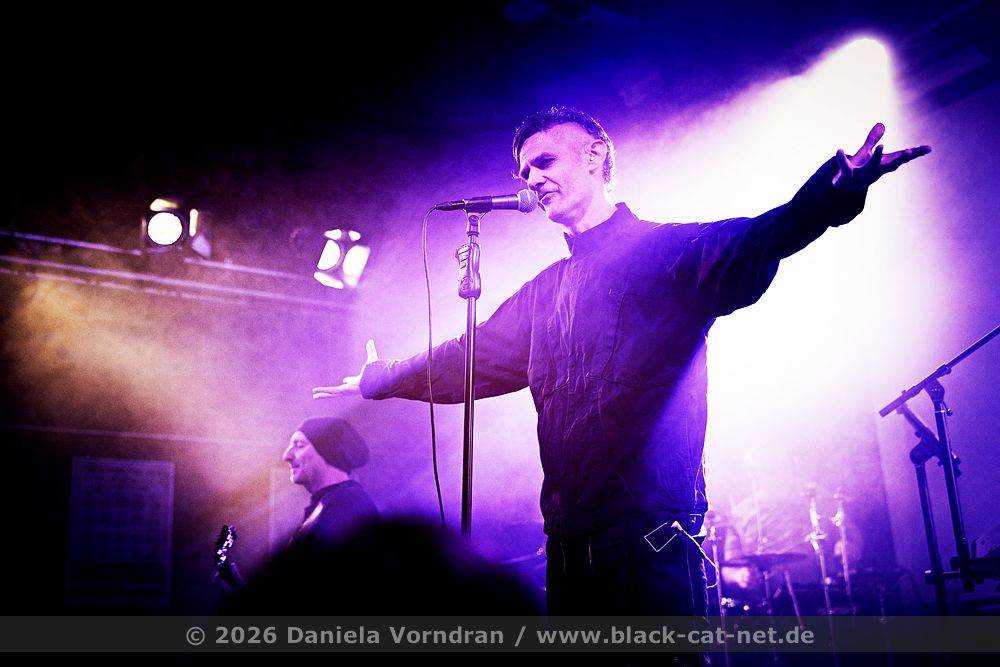
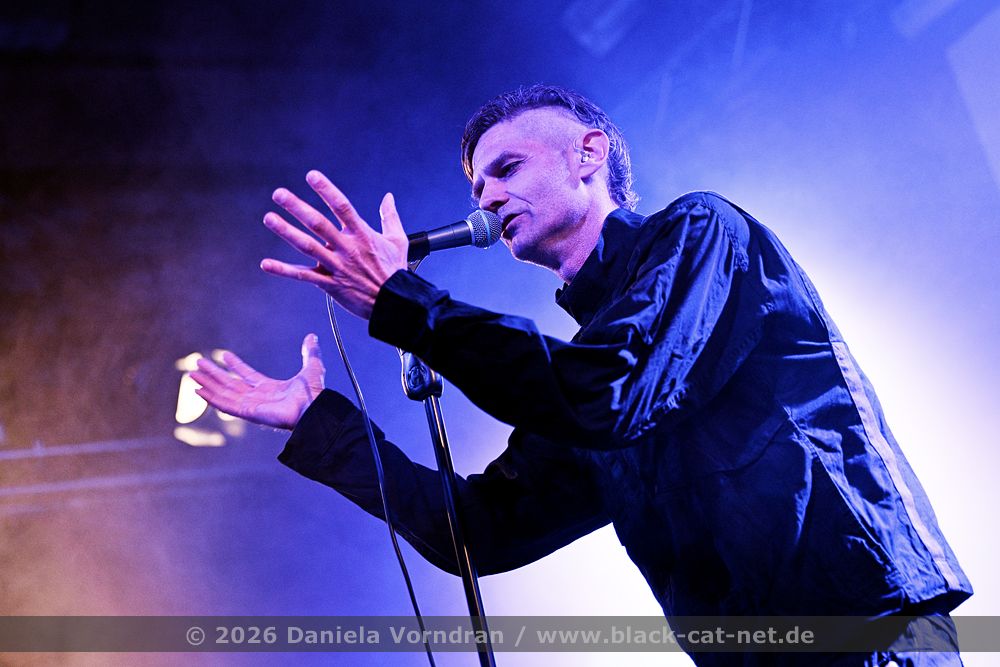
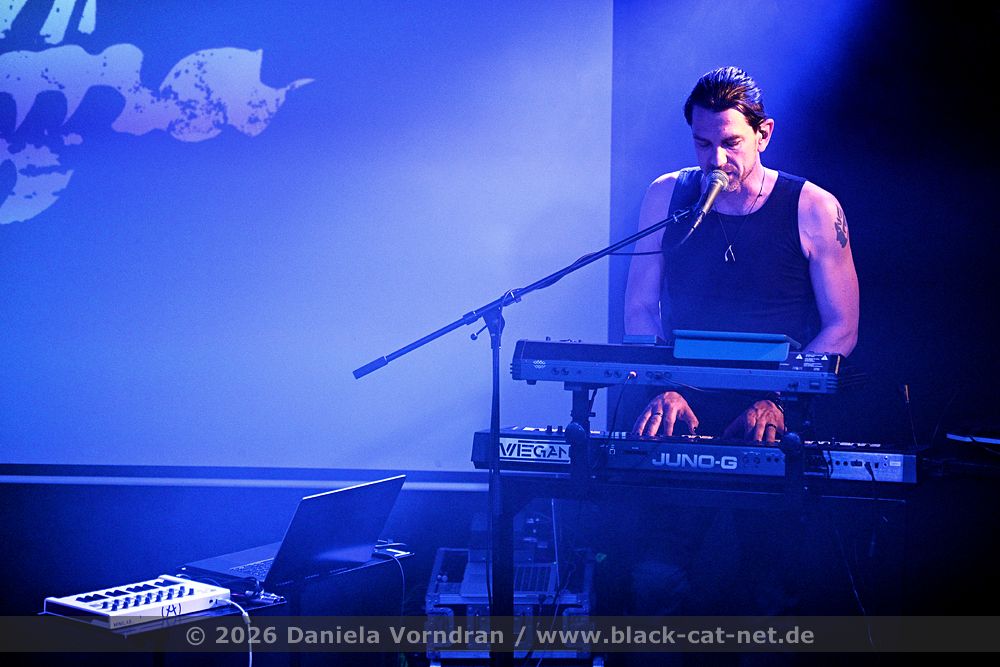
Pictures from the show on Oberhausen on 10 April 2026 by Daniela Vorndran