

 Interview with
Torben Wendt (vocals, music) from Diorama
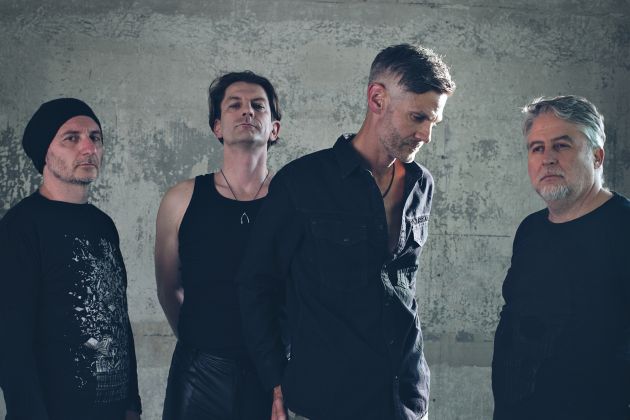
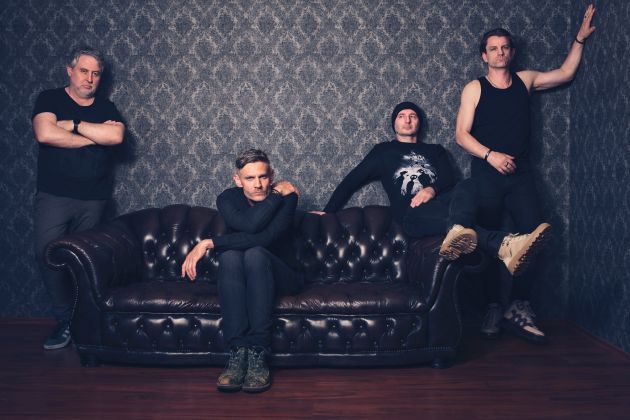
Since their formation in the mid-1990s, DIORAMA have repeatedly reoriented their “acoustic showcase” as a space for inner states, as a projection surface for things which cannot be clearly defined. On 10th April, the band led by mastermind Torben Wendt released their eleventh studio album, which was extensively celebrated over the release weekend with shows in Oberhausen and Hamburg. Prior to the release of ‘A Substitute For Light’, we had the opportunity to have some questions answered by Torben.
Reflections of Darkness [RoD]: Hello Torben, first of all, many thanks for taking the time amid concert pressures and the album release. The release of your new album ‘A Substitute For Light’ is just around the corner. On 10th April, the time has finally come. How excited are you?
Torben: It’s nice that our musical journey is entering a new phase. But I’m not actually excited. We’ve been releasing singles and videos for months now, and if there was any initial tension, it has faded in the meantime.
RoD: Three to four years between two DIORAMA records is not unusual. If you set ‘Fast Advance Fast Reverse’ aside, your last regular album release (‘Tiny Missing Fragments’, 2020) was a while ago now. Are the effects of the pandemic still being felt?
Torben: No, the pandemic is no longer an issue for me at all, except for the occasional look back at that wild, obscure, booze-soaked time. We simply seem to need our time, so that each time we finish a new record, it feels like a kind of comeback.
RoD: I’ve already had the chance to have a bit of a listen to the new album, which is being described as your “most accessible to date”. Compared to its predecessor ‘Tiny Missing Fragments’, that’s certainly accurate. Was the move towards “less is more” a deliberate counter-movement, or more of a coincidental development?
Torben: When we embark on a new production, we try to let ourselves drift as freely as possible, without imposing any specifications or rules on ourselves, not even in terms of distancing ourselves from the previous work - in order, so to speak, to arrive organically at the new, appropriate vibe. This flowing, accessible tonality of songs like ‘No Complications’ or ‘On A Journey’ crystallised on its own and immediately felt right. That, in turn, then influenced the subsequent creative work.
RoD: ‘A Substitute For Light’ revolves around the motif of light in its various facets - reflections on surfaces, in monitors, artificial substitute energies in place of genuine orientation and enlightenment. Is this “substitute light” for you more of a social diagnosis or a personal experience?
Torben: The substitute for light, in the figurative sense of hope, a goal to work towards, an inner home, the feeling of being understood, etc., has a lot to do with compensation, substitute actions, escapism into distractions or dreams. I find that equally fascinating in self-observation and as a social theme.
RoD: In an announcement from October, there was mention of “last polishing touches beneath the glow of the twin peaks curtain”. What role does this almost cinematic, slightly surreal aesthetic (I believe you’re also a big David Lynch fan) play in the production process?
Torben: Of my top five films of all time, it feels like six are by David Lynch - well, at least two for sure. Put it this way: our music studios have never really been refuges in the Scottish Highlands or sterile clean rooms hidden behind glass-fronted office bunkers, but rather the classic basement chamber. So, you’re grateful for those kinds of feel-good gimmicks that bring a sense of calm, like a ruby-red ‘Twin Peaks’ curtain. At the same time, something like that naturally reminds you of where you come from artistically, and it’s certainly no mistake to let those enduring impulses resonate along the way.
RoD: I haven’t yet had the time to engage more intensively with the new tracks and don’t want to go into all of them in detail just now. [Addendum: In the meantime, I have taken a deeper look at the album. You can read the review here.] But since I already have the opportunity, I’d like to discuss a few thoughts I had on my first listen. Let’s start with ‘Isolated’ - the second track on the album. The opening lines brought to mind a quote from a Stephen King novel - SSDD (Same Shit Different Day). A sense of self-alienation on a continuous loop - does that reflect your view of our present-day reality?
Torben: Self-alienation on a continuous loop sums it up quite well. But also, alienation from the outside world. The character who finds themselves forced into prescribed roles anew each day in ‘Isolated’ is gradually smoothed over and worn down until they exist only as a strange echo in empty rooms - as a detached spectator of their own life, without any means of access, a kind of forgotten court jester. I don’t feel that this reflects a collective lived reality. Most people, it seems to me, are far more at ease with themselves and the world, and far less at home in absurd inner ghost castles.
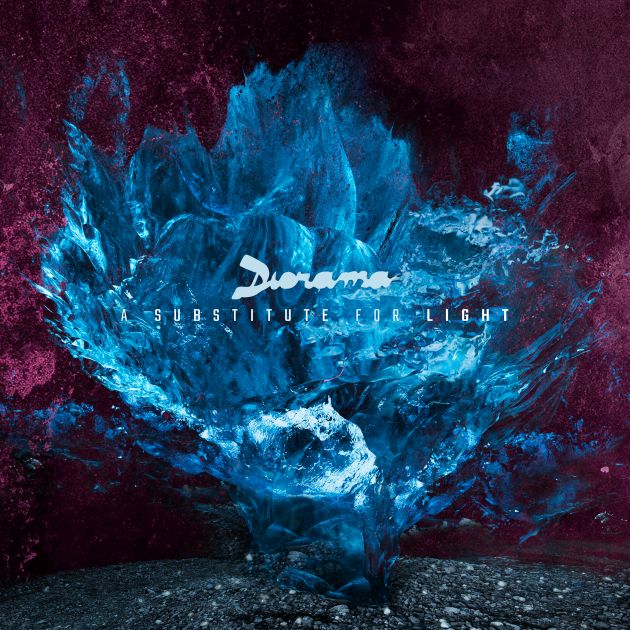
RoD: The album title comes from ‘Million Dollar Smile’, which describes the smile itself as a “substitute for light”. Is the album’s motif most clearly expressed here for you - as a surface that dazzles but does not warm?
Torben: ‘Million Dollar Smile’ is about the actual smile of a person who is loved unconditionally and unwaveringly. Emotionally, this image outshines everything. Since we are DIORAMA and not DIE FLIPPERS, this love is, of course, impossible, unreciprocated, or however you want to put it - and turns into nothing more than a dream, a substitute for feelings not experienced in reality. A comforting thought in a darkness steeped in resignation, without any alternative glimmer of hope. And in that sense, perhaps better than nothing.
RoD: ‘Kunstblut’ stands out the most to me, not least because of the German lyrics. The driving beat, the harsh sound, and of course the multi-layered, heavily distorted vocals - machine-like voices, almost like in a canon. “Kunstblut” strikes me as a metaphor for AI-generated art - AI reproduction instead of what, to me, defines art: a story, personal experience, genuine emotions, memories, biographical and social context. Am I right about that? How do you view the increasing use of AI in art, particularly in music?
Torben: ‘Kunstblut’ can be understood in the context of AI and virtually generated ideas. The song includes the line “kein Drang, kein Hadern” - this image of a drive that knows no inner conflict fits well with a form of purely technical production that gets by without biographical friction. Up to that point, I personally had no reason to take part in the rise of AI in songwriting or production, as I have always sought the imperfect, the contradictory, the deeply emotional and personally boundary-pushing aspects in art. However, the message of the song is intentionally kept very open. More generally, it is about something artificial taking the place of something that was once alive.
RoD: Do you see completely AI-generated music, which is spreading en masse - especially on streaming platforms - as a threat to genuine art and as something that could endanger your very existence as artists?
Torben: I notice that the output of completely AI-generated material is increasing rapidly. It already feels rather unsettling when you imagine where this might eventually lead and what impact this flooding of media platforms will have on the listening habits of future generations. Yes - even though there are, fortunately, one or two countertrends - I believe that things are currently heading towards arbitrariness, interchangeability, and the total market dominance of a small number of big-player corporations. One way. And that is a world in which old-school niche bands like us will eventually no longer have a place.
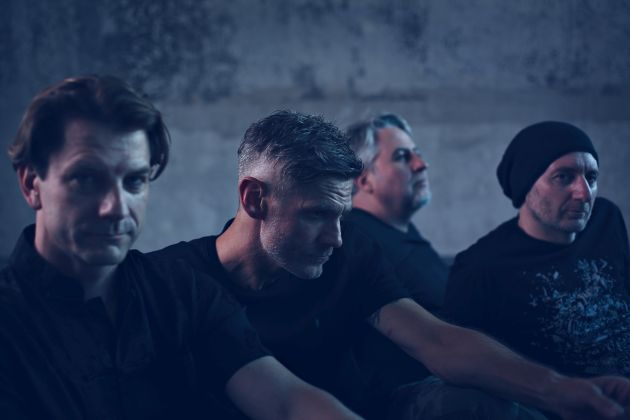
RoD: ‘The Same Ghost’ deals with a similar theme, the collective steering by algorithms - “our lines are written by the same ghost”. Is the album as a whole also a reflection on echo chambers and digital identities as a substitute for real life and genuine experience?
Torben: The digital echo chamber as a substitute for real communication with blood, sweat and tears - the album title can certainly be understood that way. At the same time, the aforementioned line “our lines are written by the same ghost” refers to artificial intelligence as the shared ghostwriter of us all. In other words, the single, uniform source that we all draw upon. For a while, I had the idea of an actual, commissioned human ghostwriter in mind for the song, and it was therefore meant to be called ‘ghostwriter’. Then I drifted somewhat off course.
RoD: Alongside the now almost obligatory digital release, you have also planned a physical release for ‘A Substitute For Light’. What exactly have you come up with for fans who value something tangible? I understand that vinyl enthusiasts will definitely get their money’s worth. Thanks in advance for that.
Torben: The CD comes in a double gatefold digipak, and alongside it there is a double vinyl edition limited to 500 copies. Both formats are appearing in our catalogue for the first time, and both are defined by the exquisite design of the Leipzig-based graphic artist User, with whom we were once again able to collaborate, as we did on earlier albums such as ‘her liquid arms’.
RoD: You have already been (or are currently) out on the road performing the album live. ‘No Complications’, ‘More Gold’ and ‘The Same Ghost’ were already played live and gradually released as singles. What was it like to present the first new songs to your fans before they had been released, before the album was on the market? How did you experience the reactions?
Torben: Seeing how the new songs - some of which have only just been released as singles - are absorbed by the audience and begin to take effect is tremendous. The songs also gain energy and a certain magic for us in the process. None of this can be taken for granted, and we are grateful that this interplay, this mutual exchange, unfolds in this way.
RoD: How important is it for you overall to present your music live and to receive direct feedback from your fans?
Torben: Presenting and performing, combined with the task of entertaining the audience, conveying emotions in colour and in real time, and feeling that resonance, has never been an add-on, but the very essence of the whole undertaking. In that respect, it has always been indispensable.
RoD: Due to scheduling constraints, we have to pause at this point and leave you in a bit of suspense. The second part of our interview with Torben will follow shortly. Then we will talk about ticket sales, planned live activities, and much more. So, stay tuned.
Website: https://diorama-music.com / https://www.facebook.com/dioramawastaken
Pictures by Thomas Wuhrer